
Table of Contents
Introduction to CHAND BAORI
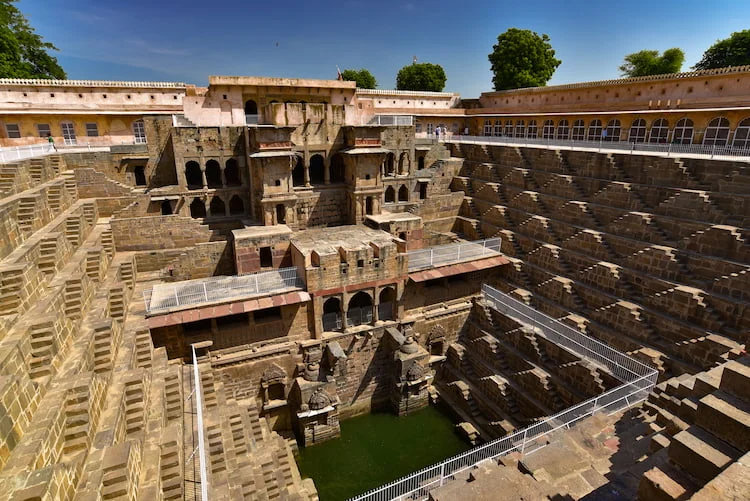
The Chand Baori, situated in the village of Abhaneri, Rajasthan, India, is one of the most beautiful examples of traditional Indian Baori architecture.
Among step wells, or Baoris, which were specially designed to store water in arid regions, Chand Baori holds a special place not only for its grandeur but also for its geometric patterns and precise engineering.
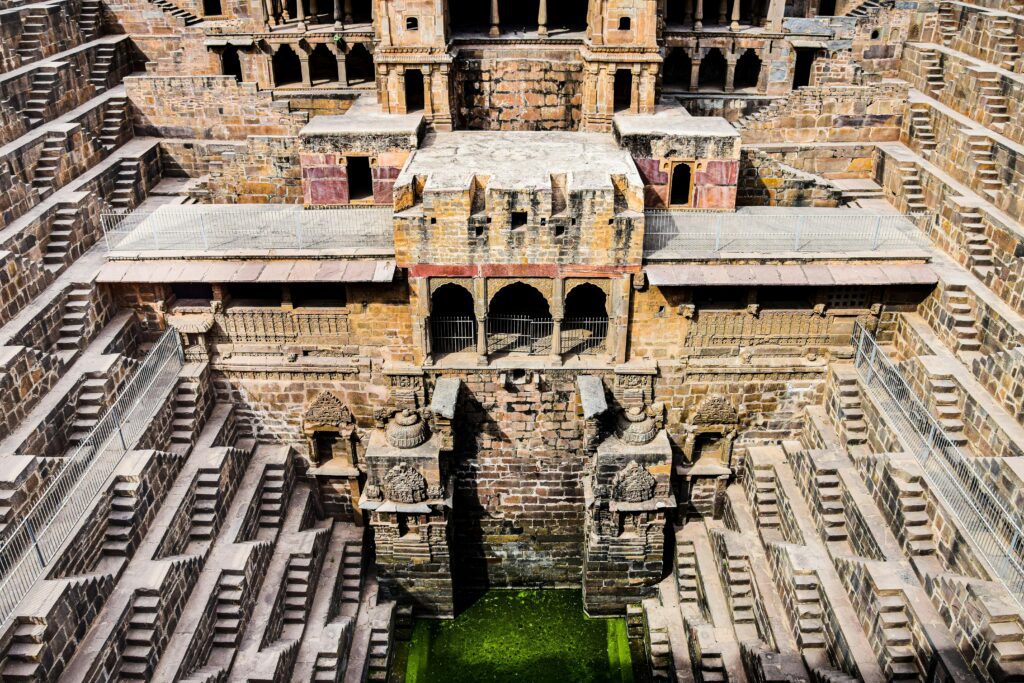
This architectural wonder attracts historians, architects, and travelers alike.
Built several centuries back, Chand Baori has survived the test of time, showcasing the genius of ancient Indian architects.
The term “Baori” in the vernacular refers to a stepwell-a deep well having a series of steps leading down to the water.
Due to its depth, symmetry, and sheer scale, Chand Baori is unique, which makes it one of the most photographed and studied Baoris in India.
This blog will analyze seven powerful facts about Chand Baori that showcase its historic, architectural, cultural, and engineering relevance.
Each fact reflects a new dimension of this incredible monument, helping the readers develop a comprehensive understanding of why it remains timeless in the Baori architecture.
Historical Significance of CHAND BAORI
CHAND BAORI is believed to have been constructed during the 8th–9th century by King Chanda of the Nikumbh dynasty, naming the stepwell after him.
It is hence over a thousand years old, standing as a testament to the advanced architecture and engineering skills of ancient India.
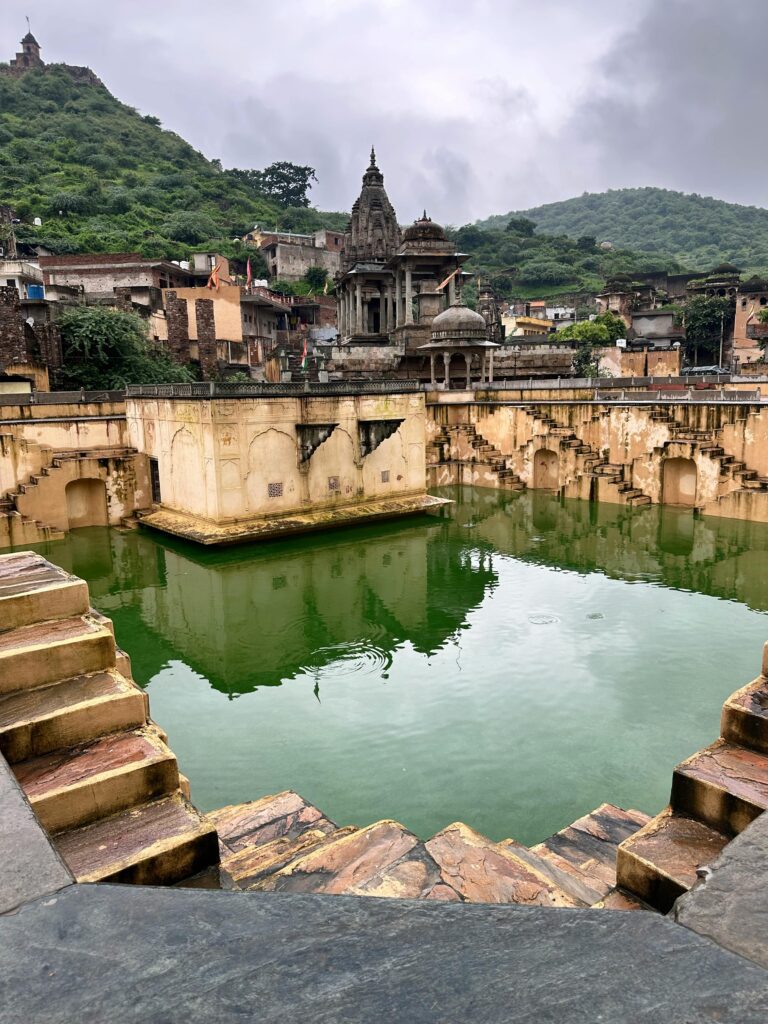
The stepwells were not only a source of water but a lifeline without which any town in Rajasthan could not exist. In most cases, a baori served many purposes: providing water for the inhabitants, a cool haven from the blistering summer heat, and a venue for social and religious functions.
The historical importance of Chand Baori is not confined to the utilitarian aspects of this edifice.
It symbolizes the climax of Baori architecture in the medieval period. Numerous inscriptions and carvings found within the temples surrounding it point to its association with religious functions, especially in Hinduism.
According to historians, the stepwell was an active cultural center where people gathered, not only for water, but for their festivals and other rituals.
That it has survived for centuries speaks volumes about the sophistication of ancient construction techniques.
Even today, architects from around the world study its design to understand the techniques of water conservation through sustainable structures and structural engineering.
It is for this reason that CHAND BAORI represents not only a Baori but also a hallmark of the rich architectural heritage of Rajasthan.
Unique Architectural Design of CHAND BAORI
What makes CHAND BAORI outstanding among the large number of stepwells in India is its architectural brilliance.
It is not just a water repository; it is a well-planned marvel that incorporates utility, aesthetics, and geometry into one structure, representing the best of Baori architecture.
A Stepwell unlike any other
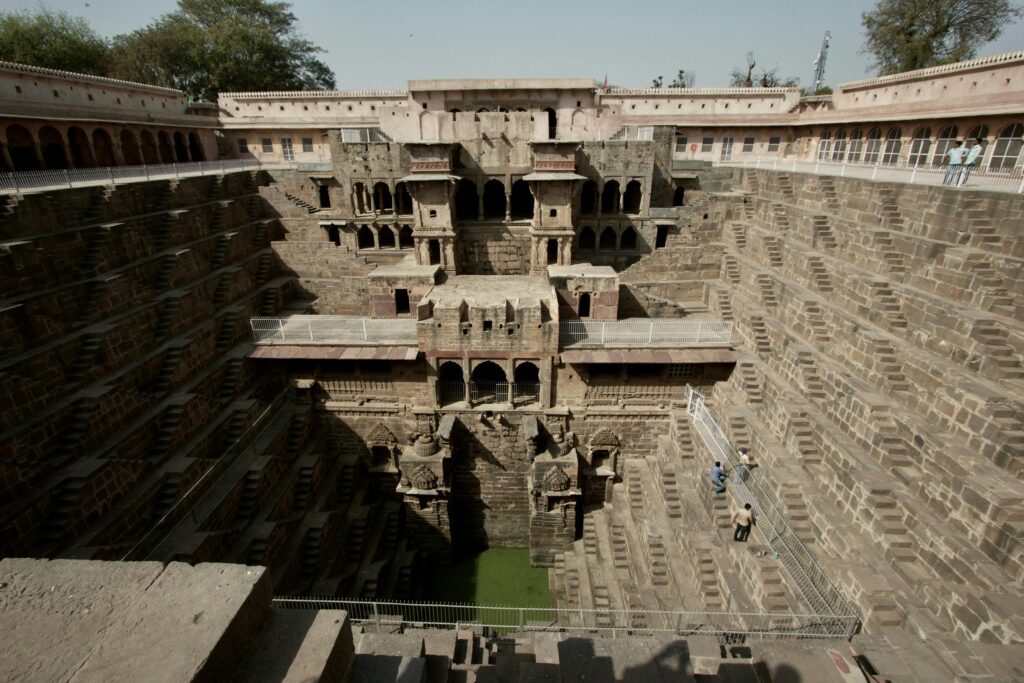
Chand Baori is one of the largest and deepest step-wells in India, with a total of 3,500 steps that are perfectly symmetrical over 13 levels, dropping around 100 feet into the ground.
These steps are not arranged haphazardly; they follow a strict geometric pattern, producing an effect akin to an inverted pyramid.
When viewed from the top, the stepwell resembles a big labyrinthine structure formed by interlocking staircases-an irresistible sight for architects, historians, and photographers alike.
These steps are deliberately designed to provide easy access to water at every level, ensuring usability throughout the year regardless of seasonal water fluctuations. This is a functional design that shows the genius of Baori architecture, where form and function both work together well.
Geometric Precision and Symmetry
The most striking features of CHAND BAORI are its geometric precision. Every step, landing, and corner is perfectly aligned to create symmetry, which is visually mesmerizing. The stepwell forms a series of repeating patterns that enhance not only its beauty but also the stability of its structure.
The walls of the Baori contain niches and recessed panels for both aesthetic reasons and to reinforce structure. Such small architectural features relieve the weight of the walls and prevent erosion with time-a very thoughtful consideration on the part of ancient builders.
Intricate Carvings and Artistic Elements
The artistry in the design of CHAND BAORI extends beyond its structure. On the walls, carvings of Hindu gods, dancers, and flora form motifs that showed the religious and cultural context of the time.
These carvings are more than decoration; they tell stories, preserve traditions, and add a spiritual dimension to the Baori.
The skill of the artisans who worked on these carvings is great, given that they were done several centuries ago without any modern tools. The intricate detailing speaks volumes about the high level of skill that artisans possessed who contributed to creating CHAND BAORI.
MATERIALS AND CONSTRUCTION TECHNIQUES
CHAND BAORI was built with stone and lime mortar, which were selected for their durability and availability. The steps and walls were made of carefully cut stone to withstand the vagaries of time, water pressure, and climatic changes.
The construction techniques reflect an advanced knowledge of weight distribution, water pressure, and architectural stability. Ancient builders knew just how to create a structure that would last for centuries intact, showing the sophistication of Baori architecture.
Integration with Environment
Another remarkable aspect of the architectural design of CHAND BAORI is its integration with the natural environment.
Positioned in a way to collect maximum rainwater, the stepwell was deep enough to tap into underground water reserves. Lower levels are much cooler than the surface, due to natural cooling; it provides relief from the desert summer heat.
The integration of environmental concerns into architectural design manifests a deep understanding of sustainability long before the modern conception of eco-friendly construction existed. Thus, CHAND BAORI is not only an architectural marvel but a brilliant example of early sustainable engineering.
Why It Stands Out in Baori Architecture
While there are several stepwells in India, none of them is equal to CHAND BAORI regarding its scale, precision, and artistic elements. Its functionality, aesthetic beauty, and cultural value make it really a rare gem in the Baori architecture of the world.
Architects and historians continue to study its design in search of how such technical excellence was attained by ancient civilizations without modern machinery.
In the end, the architectural design of CHAND BAORI forms a perfect combination of mathematics, artistry, and engineering. Each step, every carving, and every structure in it adds up to make such a monument that inspires awe even after centuries of its construction.
It is a living testament to the creativity, intelligence, and cultural richness of Rajasthan’s architectural heritage.
The Engineering Wonders of CHAND BAORI
Much more than a visual treat, CHAND BAORI is an engineering marvel. The stepwell was designed to conserve water efficiently in the arid climate of Rajasthan.
Its depth and step arrangement help regulate water temperature, keeping it cool even during the scorching summer months.
The structure also doubles as a natural cooling system: the shade from the stepwell’s walls and the circulation of air through the descending steps serve to make it dramatically cooler than the surrounding environment.
This ingenious design typifies the marriage of practicality and style in Baori architecture.
Other engineering marvels include the water-storing capacity of Chand Baori. It is designed to hold thousands of liters of water to provide a continuous supply throughout the year.
Rainwater is collected and channeled into the stepwell to minimize wastage and keep the groundwater level intact. In their time, such sustainable water management techniques were advanced and are relevant even today.
Compared to stepwells in India, Chand Baori stands out for its scale, depth, and geometric precision. Though many Baoris had utilitarian use, Chand Baori is a rare example where engineering excellence meets artistic brilliance.
Cultural and Religious Importance
CHAND BAORI forms an integral part of the cultural and religious life in Rajasthan. The stepwell is located near the Harshat Mata Temple, which is dedicated to the goddess of joy and happiness.
It is a common sight to see pilgrims arriving at the temple and continuing on to the stepwell to perform their ritual wash before offering prayers.
Festivals and ceremonies used to be held around Chand Baori. Since the stepwell was a point of congregation, every activity that went on constituted community interaction.
This makes Chand Baori more than just a Baori; it is a place where social, religious, and cultural practices meet.
The carvings on the walls of Chand Baori depict religious motifs, dancers, and deities, showing the influence of Hinduism on Baori architecture.
These designs add not only to the aesthetic beauty but also act as media for telling stories, thus preserving legends and cultural traditions.
Chand Baori is a sign of prosperity and well-being among locals. Its presence indicates the perfect mixture of functionality, spirituality, and artistry in one single structure, hence being a cultural landmark for many decades.
Visitor Experience and Tourism
Nowadays, CHAND BAORI sees tourists come from across the globe who are taken aback by its magnitude and detail in design. Visitors descend the 3,500 steps into the depths of the stepwell to experience firsthand the genius of Baori architecture.
The ideal time to visit is from October to March when the climate is cooler, and access through the stepwell is more convenient.
Photographers, more particularly, prefer Chand Baori for its symmetry of steps and dramatic shadows that create wonderful photographic effects.
Other nearby attractions include the Harshat Mata Temple and the local villages, which provide a comprehensive cultural experience. The travelers can observe traditional Rajasthani art, cuisine, and lifestyle along with this architectural wonder.
A tour to Chand Baori gives a glimpse not only into ancient engineering but also into the history and culture of Rajasthan.
Every step says something at this place-where functionality, artistry, and spirituality blend in smoothly.
Modern Recognition and Preservation Efforts
Chand Baori has been recognized all over the world for its historical, architectural, and cultural importance.
It is one of those great Baoris studied by scholars, architects, and enthusiasts of heritage all over the world to learn about advanced engineering and artistic skills of ancient India.
It is also commonly referred to as one of the greatest examples of traditional Baori architecture, which represents both functional ingenuity and aesthetic brilliance.
Global and National Recognition
While Chand Baori is yet to be a UNESCO World Heritage Site, it has received substantial attention from the Archaeological Survey of India and different heritage organisations.
Its unique design in terms of its depth and scale makes it among the most photographed and researched step wells in the world.
For heritage enthusiasts, it features regularly in studies on sustainable water management, as its design offers much-needed lessons in conservation and climate-resilient architecture.
In recent times, various documentaries, books, and academic researches have pointed toward the significance of Chand Baori, underlining that engineering, artistry, and cultural relevance go hand in hand.
Recognition through these factors has helped increase awareness amongst tourists and locals, encouraging initiatives to be undertaken for the upkeep and preservation of this magnificent Baori for the future.
Preservation and Restoration Efforts
Preservation of Chand Baori is highly important because its stone structure, intricate carvings, and geometrical steps are prone to natural erosion and human effects.
Different restoration projects carried out by ASI and local heritage groups retain the old design and try to strengthen it so that it does not collapse.
These include repairing broken stonework, preventing seepage of water that could weaken the foundation, and cleaning carvings to preserve their detailed artistry.
Similarly, other sustainable tourism initiatives have been devised to reduce the wear and tear at places of growing tourist traffic.
Informational signage and guided tours help visitors appreciate the historical and architectural significance of Chand Baori without compromising its preservation.
Through these measures, the stepwell continues to serve as a living example of ancient Indian engineering while remaining accessible to modern audiences.
Importance of Preserving the Baori Architecture
The preservation of CHAND BAORI is not limited to saving a historical monument but preserves a tradition in Baori architecture that represents centuries of innovation.
Stepwells played a critical part in Rajasthan’s water management system, and most have been lost over time due to either neglect or urban development.
By maintaining Chand Baori, we ensure that the techniques, artistry, and cultural stories embedded in Baori architecture are passed on to future generations.
Chand Baori is also studied by architects and environmentalists in a search for insight into sustainable design.
Its natural cooling system, rainwater harvesting techniques, and durable construction methods present lessons quite relevant to contemporary architecture and water conservation.
The continued recognition and preservation of Chand Baori, therefore, have both cultural and practical value, bridging ancient wisdom with modern sustainability needs.
CHAND BAORI: A Symbol of Heritage
Today, CHAND BAORI stands not only as a historic monument, but also as the embodiment of India’s vibrant cultural heritage and architectural genius.
Its survival over time serves as a reminder of how much we should value and conserve heritage structures and continues to inspire curiosity, admiration, and respect for what ancient Indian architects could accomplish.
By celebrating and protecting Chand Baori, we honor the legacy of the builders who combined art, engineering, and functionality in creating a timeless wonder.
Every step, every carved motif, and every geometric pattern is preserved not just for its beauty, but for the story it tells of the resiliency, creativity, and intelligence of a civilization that thrived centuries ago.
8. Conclusion
CHAND BAORI represents the zenith of human genius, where utility, aesthetics, and spiritualism blend into one magnificent structure. This millennia-old stepwell is far more than just a source of water-it stands to this day as a testament to the ingenuity of classic Indian Baori architecture.
The sheer size, geometric perfection, and intricate carvings make it one of the most remarkable monuments in Rajasthan and indeed all of India.
The seven powerful facts about Chand Baori discussed above detail the importance of this structure in multiple ways. From its historical creation under King Chanda to its function in sustaining local communities, Chand Baori epitomized practical intelligence and visionary foresight on the part of its builders. I
ts peculiar architectural style-with thousands of symmetrical steps leading deep into the earth-is a marvel that continues to inspire modern architects, historians, and tourists alike.
Beyond the physical entity that comprises it, Chand Baori has vast cultural and religious significance. From being a site for rituals and festivals to common public gatherings, the spot has been an integral part of local life over centuries.
Carvings and motifs that adorn its walls reflect not only artistic mastery but also spiritual devotion, blending aesthetic beauty with a sense of sacredness which has endured through generations.
Engineering-wise, the Chand Baori boasts advanced knowledge of water conservation, climate control, and sustainable building. The clever use of shade, airflow, and depth keeps the water cool and accessible year-round—a solution remarkably ahead of its time.
It is a shining example of how ancient Baori architecture combined practicality with elegance, creating structures both functional and visually breathtaking. Even today, Chand Baori fascinates and educates.
The preservation efforts at this heritage monument ensure it stands intact for generations to come, being a part of the grandeur and genius that is the architectural legacy of Rajasthan.
Its design is studied by scholars for lessons in sustainability and water management, while tourists marvel at its artistry and scale. In the end, CHAND BAORI is something more than a stepwell.
It is a historical record, a work of art, and an enduring feat of engineering genius. Every step, every carving, and every geometric pattern narrates a story of ingenuity, culture, and devotion.
Exploring Chand Baori allows one to witness firsthand the remarkable achievements of ancient India in Baori architecture and understand why such structures remain celebrated even in the modern era.
Its legacy is not only about water or stone-it is about the ingenuity, creativity, and spirit of a civilization that valued both utility and beauty. CHAND BAORI reminds us that architecture is not just about building buildings; it is about creating space to sustain, inspire, and connect generations.
In preserving and appreciating monuments such as Chand Baori, we are paying due respect to the artistic brilliance and engineering excellence of our ancestors, ensuring that the story of Rajasthan’s heritage will continue to inspire and captivate hearts and minds around the world.