
Table of Contents
Introduction to Raniji Ki Baori
Nestled in Bundi, a historic town of Rajasthan, Raniji Ki Baori is one of the country’s most magnificent stepwells.
An architectural marvel, this is much more than a functional water storage system but testifies to the rich cultural and artistic heritage of Rajasthan.
Stepwells or baoris played an indispensable part in the life of arid region people of India, serving not only a dependable supply of water but also as social and religious focal points for the local community.
Among them, Raniji Ki Baori is unique for its intricate design, grandeur, and historical significance.
Constructed in the 17th century, this baori stands as a symbol of royal patronage and architectural brilliance.
The ingenuity of Rajasthani architecture is reflected through its elegant steps, carved pillars, and multi-level terraces. People leave here struck by its serene beauty and the perfect symmetry of its structure that seamlessly blends functionality with artistry.
A combination of history, culture, and architectural finesse makes Raniji Ki Baori one of the must-see places in Bundi.
Historical Background of Raniji Ki Baori
Apart from being an architectural genius, Raniji Ki Baori is a historical monument that reflects the vision, devotion, and determination of the people of Bundi, Rajasthan.
Constructed in 1699, this stepwell was commissioned by Rani Nathavati Ji, the queen of Bundi, following the untimely demise of her husband, Maharaja Rao Raja Anirudh Singh. In the aftermath of her personal loss, Rani Nathavati Ji sought to create a structure that would serve the community and leave a lasting legacy of her devotion and benevolence.
This endeavor marked her as one of the few royal women in history who directly contributed to public infrastructure and architectural heritage in Rajasthan.
In the late 17th century, Rajasthan had to contend with many ills, including recurring droughts and paucity of water. It was during this time that stepwells, or baoris, became an absolute necessity as a dependable source of water.
Ingeniously designed, reaching well into the groundwater during the most inhospitable dry seasons, they became surest means of sustaining not only the people in the community but also the livestock.
Viewed in this light, the construction of Raniji Ki Baori was an act of royal benevolence, indeed; it was an urgent environmental and social need at the time. Its creation exemplifies how architecture in Rajasthan combined utility with artistry, transforming a practical water storage system into a magnificent monument.
The historical context of baoris in Rajasthan is indeed striking. Besides water conservation, these structures performed several other functions.
They were social hotspots, places of religious activity, and even quiet retreats. Stepwells were usually elaborately carved, with murals and sculptures adorning the walls, making them dynamic cultural beacons.
Of these, Raniji Ki Baori stands out because of its royal patronage and more elaborate design. The queen’s vision was to create a baori that would rival any other in grandeur while remaining functional for the people of Bundi.
Furthermore, Raniji Ki Baori epitomizes the socio-political life of Rajasthan during the Rajput period. The construction of monumental stepwells was usually an expression of power, wealth, and refinement.
By commissioning this baori, Rani Nathavati Ji attended not only to a practical necessity but also to the reinforcement of the royal image of her family. It showed that the rulers of Bundi were custodians of the land and patrons of art and architecture.
The intricate carvings, multi-tiered design, and symmetrical layout of the stepwell are all indicative of the high standards the Rajput architecture upheld, which aimed at functionality and grandeur.
The other historical aspect of Raniji Ki Baori is its relation with the local legends and folklore of Bundi. Stories passed down through generations highlight the queen’s compassion and her dedication to the welfare of her people.
According to local tales, the construction of the baori provided employment to hundreds of artisans, laborers, and craftsmen, thus supporting the local economy.
These craftsmen not only executed the structural work but also contributed to the ornate architectural detailing that makes the stepwell unique.
Raniji Ki Baori also featured in the everyday life and cultural functions of its people. In an era when modern plumbing did not exist, stepwells were central to life in Rajasthan. Women, children, and elders would assemble at these baoris to collect water, but more so to socialize, exchange news, and rejoice in small community events.
This baori was a meeting place for people where cultural bonds were nurtured and traditions were passed on. This social aspect is another layer of history that the stepwell possesses and makes it much more than just a stone-and-step monument.
Its architectural innovations make Raniji Ki Baori a much more historically significant place. While many of their contemporaneous stepwells were built as single-level ones, this baori had multiple levels and intricately carved pillars with spacious terraces, reflecting advanced knowledge in the realms of engineering and design.
The structure was built to withstand certain environmental challenges, such as soil erosion, water pressure, and seasonal variations, which speaks highly to the sophisticated understandings of Rajasthani architecture that existed well over three centuries ago.
Architectural Marvels of Raniji Ki Baori
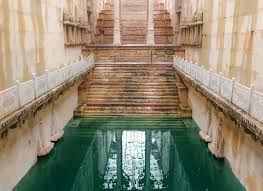
The architecture of Raniji Ki Baori is a perfect reflection of Rajasthani craftsmanship. Spread over a vast area, this multilevel stepwell has a series of descending steps leading to the water level. The symmetrical design ensures balance and visual harmony, creating an architectural masterpiece admired for centuries.
Key architectural features:
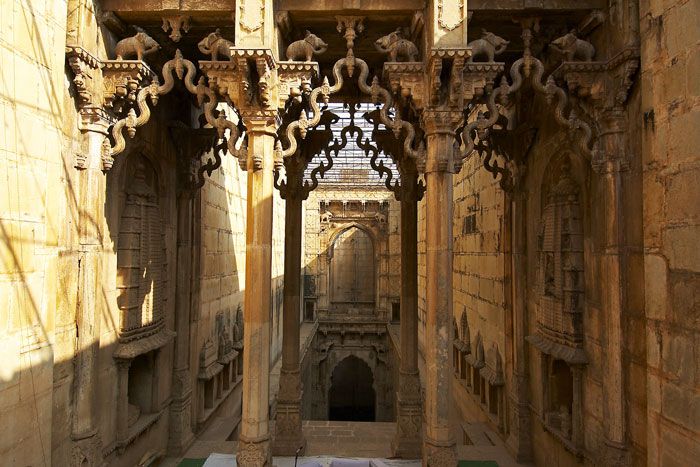
Intricate Stone Carvings: Each wall and every pillar of the baori bears carvings depicting minute details of floral patterns, geometric designs, and motifs inspired by the local folklore. These carvings reflect the artistry and skill of the craftsmen of that era.
Arches and Pillars: Beautifully carved arches support the baori, along with rows of pillars, creating an eye-catching effect. These are typical features of Rajput architecture and stand witness to their royal patronage.
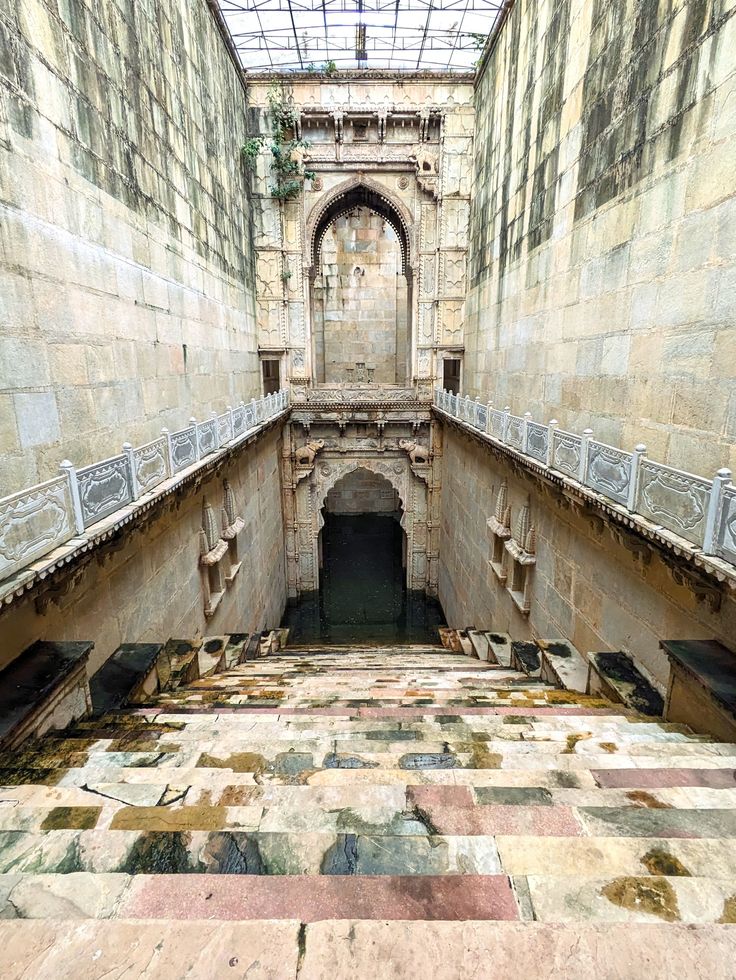
Terracing Steps: Raniji Ki Baori has a number of step levels down to reach the water reservoir area. These terraces were designed for access, as well as to keep the structure stable against soil pressure and water flow.
Geometrical perfection-the symmetry and alignment of the steps, pillars, and balconies bespeak of careful planning and exactitude in execution that make the baori a most lasting wonder of architecture.
Raniji Ki Baori is the epitome of architectural brilliance, fusing functionality with artistry. While serving the purpose of access to water, it stands out as a work of art that captures the imagination of visitors and historians alike.
Cultural Significance of Raniji Ki Baori
Much more than the structure of a building or a functional storage reservoir, the Raniji Ki Baori testifies to the rich cultural texture of Rajasthan. Traditionally, the stepwell or baori in India was designed to serve practical and social purposes.
In arid regions such as Bundi, these structures were vital to community life, and Raniji Ki Baori stands out as a symbol reflecting how architecture can represent cultural values, social practices, and religious traditions.
A Social Hub for the Community
During the 17th century, stepwells like Raniji Ki Baori formed part of daily life. Women would come to fetch water for household consumption, children would play near the cool water, and elders rested and shared stories.
This stepwell was more than a water resource; it is a social gathering place, fostering a sense of community and cultural continuity. The terraces and steps of this baori provided shaded spaces, making it just right for social interaction, especially in Rajasthan’s scorching climate.
The spacious terraces in the design of Raniji Ki Baori and the well-planned steps further facilitated these gatherings.
Because of the architecture of the baori, people were able to sit comfortably, interact with each other, and generally engage in communal activities without interfering with the water collection process.
This is a characteristic feature of traditional Rajasthani stepwell design, where every structural decision reflected both utility and cultural sensibility.
Religious and Ritual Significance
Most of the stepwells in Rajasthan were associated with religious routines, and Raniji Ki Baori is not an exception. The locals considered the water of the baori to be holy and used to conduct various ceremonies and offerings near its steps. People would gather as devotees to do rituals at this stepwell during festivals or any important days of the year.
The architectural magnitude of the baori included carved pillars and symmetrical terraces that added to its sacred atmosphere.
The play of light and shade, the echoing sound of footsteps on stone steps, and the serene pool at the base created a peaceful environment that was conducive to meditation and prayer. In this sense, the architecture of Raniji Ki Baori was deliberately designed to accommodate spiritual practices, reinforcing its cultural significance.
Preservation of Folk Traditions and Stories
Raniji Ki Baori also acts as a repository of local folklore and history. Over the centuries, stories regarding Rani Nathavati Ji and the construction of the baori have been passed down through generations.
These narratives emphasize the queen’s compassion, her commitment to her people, and her vision to combine utility with artistic excellence.
In addition, carvings and inscriptions on the baori’s walls represent mythological scenes, floral motifs, and traditional patterns, expressing the artistic and cultural ethos of the Rajput period.
Each level of this stepwell narrates a story, allowing visitors to experience Rajasthan’s cultural heritage firsthand.
With these artistic elements, Raniji Ki Baori preserves the folk traditions and keeps alive the memory of local customs, craftsmanship, and beliefs.
Architectural Reflection of Cultural Values
The architecture of Raniji Ki Baori represents much more than functionality; it is a representation of the cultural values during this time. The meticulous design, symmetry, and ornamentation detailed here tell of the importance given to aesthetics, harmony, and social status.
By investing in such an elaborate baori, Rani Nathavati Ji showed that the cultural and spiritual needs were just as important as the functional needs.
The multi-level configuration and carved pillars of the stepwell have also come to symbolize the layering of society, the hierarchy of royal patronage, and the integration of art into daily life.
In a nutshell, the baori architecture manifests the cultural philosophy of Rajasthan, where art, community, and functionality exist in a perfect balance.
Tourism and Cultural Revival
Even today, Raniji Ki Baori stands important for the preservation and promotion of Rajasthani culture. Historians, architects, artists, and travelers find its cultural and architectural brilliance very appealing.
While visiting the baori, one learns about historical social structures, rituals, and the interaction between daily life and art in medieval Rajasthan.
The stepwell continues to hold cultural significance for heritage conservation efforts. Local authorities and historians strongly believe that Raniji Ki Baori should be preserved not only for its architectural value but also for its role in maintaining cultural identity.
A visit to the baori and learning about it contribute to the continued appreciation and understanding of Rajasthan’s rich heritage.
Unique Features That Make Raniji Ki Baori Special
Several factors make Raniji Ki Baori different from other stepwells of Rajasthan:
Depth and Size: The baori goes several stories underground; its deep reservoir is capable of storing thousands of liters of water.
Water Conservation Techniques: The ingenious design assures a constant supply of groundwater, reducing evaporation to a minimum-a reflection of advanced engineering knowledge of the time.
Rajput Architectural Influence: The ornamental pillars, along with the intricate carvings and royal aesthetics combined, show the Rajput architectural style common in Bundi.
Inscriptions on some walls reveal much about the period of their construction, the history of the kings, and local history.
Underground Chambers: The baori includes hidden chambers and corridors displaying both functional design and artistic creativity.
These unique features make Raniji Ki Baori a prime example of how architecture and culture can blend in effortlessly to create a lasting legacy.
Visiting Raniji Ki Baori: What to Expect
Raniji Ki Baori represents a journey into history for the travelers and enthusiasts of architecture. The serene environment of the stepwell, along with the visual grandness, presents a unique experience that is incomparable to any other monument.
Visitor Information
Best Time to Visit: Pleasant weather prevails from October to March, which are the ideal months.
Entry Details: The stepwell is easily accessible in the old city area of Bundi. As there is no steep climb, a visitor can wear comfortable footwear to explore the terraces and steps.
Local attractions include the Bundi Palace, Taragarh Fort, and other historical sites, and thus, a number of sightseeing tours can be combined with ease.
Tips for Photography: The symmetrical steps and carved pillars create stunning visual compositions, perfect to capture for photography enthusiasts.
Visitors are often mesmerized by the play of light and shade that occurs when the sun filters through the arches and the terraces, underlining the architectural genius of Raniji Ki Baori.
7 Breathtaking Architectural Features of Raniji Ki Baori
Following are the 7 most remarkable features which make Raniji Ki Baori an architectural wonder:
The Grand Entrance: The baori opens with an ornate gateway featuring intricate carvings and immediately reflects its royal heritage.
Multi-level steps and terraces – each level offers a unique perspective of the structure, and the steps lead down gracefully to the reservoir.
Carved Pillars and Columns: Finely carved stone pillars, in rows, support the terraces, reflecting extraordinary craftsmanship.
Ornate Balconies: The baori contains balconies from which the stepwell can be overlooked by visitors, adding elegance to the design.
Symmetrical Design Patterns: Perfect geometric alignment of steps, pillars, and walls creates a visually pleasing symmetry.
Historical Inscriptions: The engravings on walls narrate the stories of Rani Nathavati Ji, the royal patron, and the era of construction.
Water Storage and Underground Chambers: Ingenious underground chambers ensure efficient water storage and structural stability, showcasing advanced engineering.
Each of these features reflects the artistic vision and the engineering prowess of the builders, and Raniji Ki Baori is a timeless symbol of Rajasthani heritage.
8. Conclusion
Raniji Ki Baori is no ordinary stepwell; it epitomizes the royal heritage, artistic genius, and utilitarian engineering of Rajasthan in true proportions.
Its construction reflects the vision and devotion of Rani Nathavati Ji, who envisioned a structure that would serve generations of her people despite the many challenges recorded during those times.
Today, the stepwell stands as a testament to how architecture can combine utility, cultural significance, and aesthetic beauty into one timeless creation. As one walks through Raniji Ki Baori, one immediately is struck by the architectural sophistication that marks every corner of the place.
From the intricately carved pillars to the perfectly aligned terraces, every element is a very careful choice that comes together to create harmony, balance, and visual splendor.
This level of detail shows not only the technical abilities of craftsmen of that time but also the cultural emphasis that was placed on making public structures works of art.
The baori was planned in such a way that it was practical as a water reservoir and served simultaneously as social and cultural hotspots-a combination very few architectural designs could offer.
Another reason that makes Raniji Ki Baori so special is that it is timeless. Even centuries after it was built, the monument attracts scholars, tourists, historians, and photographers alike in large numbers.
The stepwell is a living monument as each carved pillar, ornate balcony, and descending stair narrates stories of devotion, craftsmanship, and life in medieval Rajasthan.
A study of its design can show just how the architecture of traditional Rajasthani buildings catered to environmental needs such as the conservation of water and climate control long before methods of modern engineering were devised. The cultural significance of the baori is equally profound.
Besides being a source of water, it used to be a social meeting place where people used to assemble, share stories, and celebrate festivals. Women used to spend hours right at the stepwell, as this was their duty to fetch water, developing a sense of community and shared experience.
In that manner, Raniji Ki Baori represented much more than stone and steps; it was the heartbeat of the local society. The presence of historical inscriptions and legends further enhances its worth, which speaks volumes about the life, values, and governance of the Rajput era.
The tourism perspective of Raniji Ki Baori is one of a kind. Often, the play of light and shadow on the stone steps, the echoing tranquility of the underground chambers, and the grandeur of the carved pillars and terraces leave every visitor mesmerized.
Every angle gives a different perspective and showcases the perfect symmetry and detailed craftsmanship that define this architectural marvel. This stepwell exemplifies how functional architecture can be transformed into a work of art and always keeps leaving an impression on every visitor who enters the place.
Further, this engineering genius of Raniji Ki Baori inspires architects and conservationists even today. Indeed, its design ensured structural stability, effective water management, and climatic comfort without modern technologies.
In this way, it fits as an exemplary case of sustainable architecture from ancient times because it integrates aesthetics into practical functionality. This lesson in the integration of beauty and usefulness stands valid even today, underlining the value of sustainability that ancient practices of architecture imparted to us.
Basically, Raniji Ki Baori is a celebration of human creativity, cultural devotion, and architectural excellence. It stands as a bridge between history and the present, connecting visitors to the lives and stories of those who built it centuries ago.
Each carved stone and tiered step tells a story of vision, resilience, and artistry. For anyone exploring the heritage of Rajasthan, this baori is a timeless treasure that speaks volumes about the soul of Bundi regarding its history, culture, and architectural brilliance.
In sum, the grandeur, historical relevance, and architectural sophistication make Raniji Ki Baori far more than a stepwell; it is a sign of Rajasthan’s continuing legacy. From its functional brilliance to the richness of its culture, every aspect of this stepwell reflects and shows why it remains admired centuries after it was built.
Visitors leave with a sense of awe, inspiration, and a deeper appreciation for the ingenuity of Rajasthani architecture, making Raniji Ki Baori a true jewel of India’s historical heritage.