
Table of Contents
Intoduction
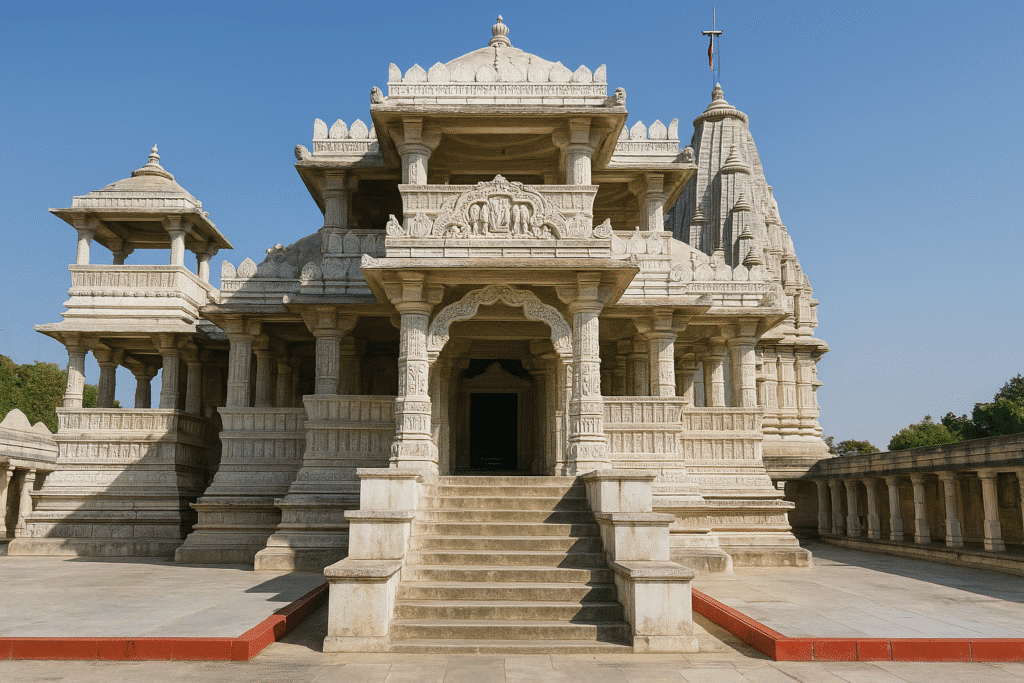
The Dilwara Temples, nestled in the serene hills of Mount Abu in the state of Rajasthan, are known as one of the most beautiful ancient temples of India.
The temples are famous for their white marble structure and exquisite craftsmanship. The Dilwara Temples date back between the 11th and 13th centuries AD and symbolize the art and devotion of the Jain community.
Thousands of tourists visit the temple every year.
Through this blog, we will bring to you 5 astonishing facts about the history of the Dilwara Temples, and we are sure that whatever your domain of expertise—history, architecture, or religiosity—these facts will only help you appreciate this ancient temple complex more.
Historical Roots of Dilwara Temples
The Dilwara Temples, situated in the picturesque hills of Mount Abu, in the state of Rajasthan, are some of the most holy temples in the ancient period in India. In terms of their origins, these temples belong to the 11th and 13th centuries.
This period in the history of India was a time that saw a resurgence in the fields of art, culture, and religion under the patronage of the Jain ministers.
The first of these temples, known as Vimal Vasahi Temple, was built by a Jain minister of Solanki dynasty named Vimal Shah in 1031 AD. This shrine was built in reverence of Lord Adinath, who was the first Tirthankara of the Jain religion.
The benchmark for all marble quality and religious structures that this complex consists of was established by Vimal Vasahi Temple.
The construction of this religious structure was carried out out of religious devotion as well as an ambition of creating something lasting that mixes both devotion and quality.
After Vimal Vasahi, a series of temples were constructed over the next two centuries, including the Pittalhar Temple dedicated to Lord Neminath, the Parshvanath Temple, and the Mahavir Temple.
The construction of each of these temples was initiated by different people who were greatly dedicated to the principles of Jainism and wanted to be a part of the religious and cultural heritage of Mount Abu.
The construction of these different temples in succession showcases how passion and architectural skills were handed down from generation to generation.
The historical background of the Dilwara Temples is just as engrossing. During the 11th to 13th centuries, Rajasthan was a major place of intellectual and political developments, as Jainism was a highly influential force in forming the religio-social fabric of the region at that time.
The Dilwara Temples not only acted as places of worship but as sites for meditation, learning, and spiritual education as well. Monks, scholars, and devotees flocked to these temples to hold intellectual discourses, learn from sacred texts, and perform ascetic rituals as a kind of spiritual practice at these sites, thus making the Dilwara complex a major place of intellectual and spiritual endeavors, as advocated by Jainism.
Even the legendary and historical accounts confirm the dedication and hard work that might have gone into the construction of the Dilwara Temples.
It is said that the skilled artists and workers dedicated many years to carving designs from pure white marble brought from the mountains by the river Wagad.
Historical accounts and legends about patronage and community participation add another dimension to the story and ensure that the temples are a living history and not merely the site of worship.
The selection of the site for the temples was deliberate. The hills offered a peaceful and seclusive place perfect for meditation and contemplation, far from the city bustle.
Additionally, the site offered opportunities for creative architectural design since the design of the temples was influenced by the contours of the hills amid the forests.
In short, the ancient roots that trace back to the Dilwara Temples demonstrate a perfect amalgamation of devotion, historical value, and artistic expertise.
Also, by knowing its histories, it becomes easy for us not only to admire its beauty and artistry that goes into the construction of these temples, but also to understand its value and significance related to its historical past and related devotion that took place many centuries ago.
Exquisite Marble Architecture of Dilwara Temples
The most intriguing feature of the Dilwara Temples is its breathtaking marble architecture.
The marble architecture at the Dilwara Temples is a staggering piece of craftsmanship that has intrigued many visitors and historians.
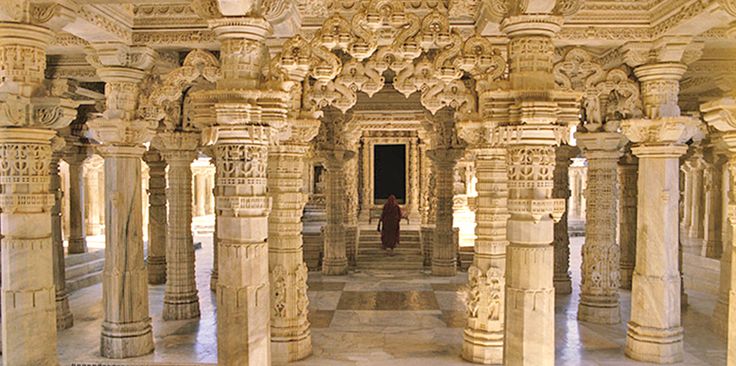
The Dilwara Temples are made entirely out of pure white marble. This is a true testament to the ingenuity and craftsmanship of the architects and artisans of those times.
The marble used for the construction is not only beautiful, it is resilient and has withstood the test of time.
The carvings in every nook and cranny of the Dilwara Temples depict a blend of artistic excellence and religous significance.
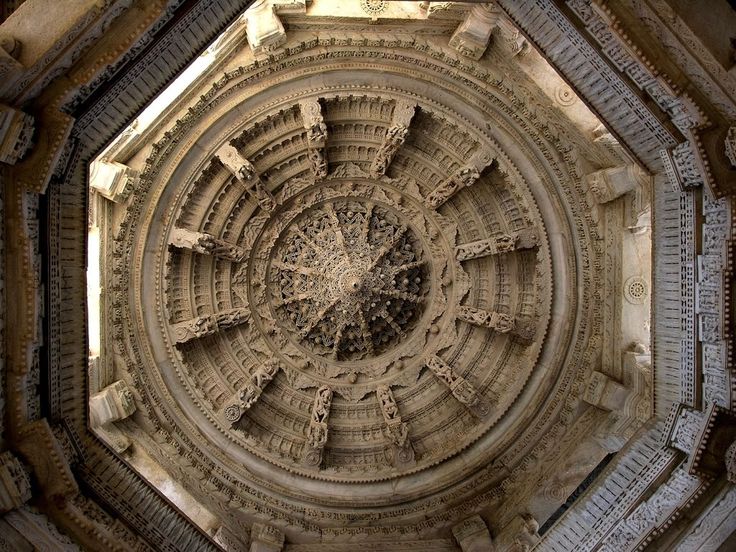
The ceilings and walls are ornamented with intricate patterns of flowers and geometrical figures, along with pictures of god and goddesses of the Jain pantheon and Jain Tirthankaras. Each of these carvings, big or small that it is, has been done to perfection.
One of the most striking examples of carvings can be seen in the ceiling of the Vimal Vashai Temple, where intricate geometric designs and lotus flowers adorn the surface.
These carvings not only add to the aesthetic appeal but also denote harmony and balance in their design; this reflects the Jain philosophy of harmony and symmetry.
In other temples within the group, like the Pittalhar Temple, intricate carvings of various deities and motifs adorn the ceiling; this results in every hall being a work of art in ancient temple architecture.
It is a special mention-worthy aspect of Dilwara Temples to talk about the pillars of this monument.
Each pillar of Dilwara Temples is unique in carving, with no identical design, while some of them include sculptured figures of dancers, musicians, and even animals, which is a manifestation of the richness of artwork in medieval periods of Indian history.
It should be noted that it is a rare phenomenon to see functionality along with artwork in historical monuments.
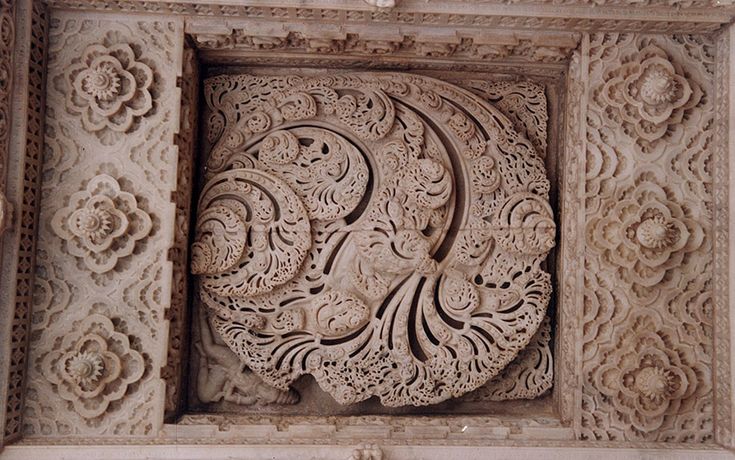
Another interesting feature is the pearlescent quality of the marble, which changes with the reflection of light at different times of the day, producing a stunning effect.
Light from nature is also effectively used in the design of this temple, wherein certain carvings are highlighted by the light itself, and a divine effect is produced.
The temples have equally magnificent marble floors. Highly polished, they reflect the ceiling perfectly, creating an effective sense of continuity and symmetry.
The level of detail in the marble work done also serves to add to the already evident superior craftsmanship in constructing the Dilwara Temples.
When contrasted with other ancient temples found in India, it becomes clear that the Dilwara Temples resemble each other for their accuracy, complexity, and artistic craftsmanship of marble.
Such features that combine structural originality, artistic and religious significance lead to these temples being more than worship sites – they are masterpieces of artistic expression.
Essentially, the marble sculptures of the Dilwara Temples serve not just as exemplars of artful expertise but also embody devotion, cultural diversity, and the continuing legacy of ancient temple arts.
Each carved pillar, ceiling, and polished floor reflects not just the ingenuity and ambitions of mankind but also the brilliance of the artists who were responsible for the creative expression of that ingenuity.
Fascinating Historical Facts
The Dilwara Temples are not merely celebrated for their architectural grandeur; rather, this place is also an infinitely valuable source of historical importance that showcases the rich cultural heritage of Rajasthan and the Jain community as well.
These temples were developed in the 11th to 13th centuries AD through the patronage of influential Jain ministers and kings.
One of the most intriguing historical facts is that these temples were built with meticulous planning and the involvement of several generations.
For example, the Vimal Vasahi Temple was built under the supervision of Vimal Shah, a Solanki dynasty minister, while the subsequent temples like those at Pittalhar, Parshvanath, and Mahavir were built under the supervision of other dedicated followers.
Such an involvement of several generations not only depicts the dedication of the Jain community in their worship practices, but it also illustrates the continuity of these practices.
The Dilwara Temples are also an important part of the overall history of Mount Abu, which has always been an important spiritual and cultural center.
The Dilwara Temples were an integral part of life in the Digambara and Shvetambara sects of Jainism and were used for both religious and intellectual pursuits.
People belonging to different parts of the country used to assemble at this place and form an important spiritual community.
One of the most fascinating historical facts is the extent of artistic expression reached using very basic tools.
It is a matter of historical record that a great deal of manual labor was done in carving out intricate details on the marble pillars, ceilings, and even the doors.
It is a matter of history that a lot of years were devoted to carving out these details, employing only chisels made of stone.
Despite being bombarded by natural elements for so many years, the Dilwara Temples remain remarkably preserved due to the quality of marble used and skilled craftsmanship.
Over the years, many restoration and conservation projects have been carried out to keep these temples as living historical sites so that their grandeur and significance can always motivate successive generations.
To the above, it can be added that the local lore and history surrounding the temples also helps build the allure around the temples.
Therefore, the accounts regarding the patronage by the royals, the visions, or the religious devotion go a long way in symbolizing the fact that there has been a religious association that has kept the Dilwara Temples intact for all these years.
In essence, the Dilwara Temples house not only architectural brilliance; indeed, the Dilwara Temples are history etched on marble.
The knowledge of these historic truths will help the visitor relish not only the spectacle but the symbolism generated in this ancient piece of India.
Spiritual and Religious Significance
The Dilwara Temples are more than examples of architectural brilliance; they have a strong link with religious and spiritual traditions and are one of the most religious and holy places for Jains in India.
The Dilwara Temples have remained a place for devotion and religious studies for thousands of years.
The heartbeat of this spiritual significance is the Tirthankaras. Tirthankaras in Jainism symbolize teachers who help people on the correct path of righteousness, non-violence, and self-control in life.
Every temple in the Dilwara Group of Temples is dedicated to a particular Tirthankara in whose name exquisitely carved idols are placed as a symbol of prayer and contemplation.
For example, the Vimal Vasahi Temple is dedicated to Lord Adinath, while the Pittalhar Temple is dedicated to Lord Neminath. The glorious idols of gods in these temples are placed in exquisitely designed sanctums.
The Dilwara Temples are also notable for the ceremonies that are performed there. The daily prayer and devotional sessions attract devotees from all over India and other countries.
Occasions such as the celebration of Mahavir Jayanti and other holy days of the Jain community are marked by majesty and festivity, lighting up the halls of the temples with lamps and decorations.
The presence of the devotees during these celebrations cements the temples’ position as platforms for spiritual oneness.
The peaceful setting of the Dilwara Temples in Mt. Abu adds further to their spiritual surroundings. The temples are surrounded by hills and mountains, and this setting provides a peaceful atmosphere that induces people to meditate and dwell on their souls.
Many tourists feel a sense of peacefulness and tranquility when exploring the temples and relaxing in their courtyards.
The integration of natural surroundings and spirituality is what gives the Dilwara Temples their unique appeal and qualities, making them the best destination for those seeking peacefulness and spirituality in their lives.
Additionally, the Dilwara Temples are an impetus for followers of the Jain faith to undertake a life of discipline, kindness, and devotion, which are basic tenets of their faith.
They are an exemplification of how architecture, art, and religiosity can blend to create spaces not only aesthetically pleasing but also spirituallyavra.”
Essentially, the religious importance of the Dilwara Temples transcends religious practices and sculpture.
These temples are vibrant religious centers that provide an individual with an opportunity to reach out to the rich religious past through the serenity of religious sites and also to acknowledge the incredible synthesis of religion, history, and artistic expression that characterizes one of India’s oldest temples.
Hidden Gems and Lesser-Known Facts
Although the Dilwara Temples are famous for their marble structure and religious importance, there are several hidden gems and intriguing facts about the temple that often go unnoticed by tourists.
Discovery of these unknown facts will give a whole new meaning and depth to the historical temple.
One of the most interesting aspects of Ellora Caves is the symbolic sculptures that adorn the ceiling and walls.
Apart from their mere aesthetic appeal, the sculptures tend to include Jain cosmology, tales of Tirthankaras, and philosophical tenets – offering glimpses into the religious and cultural outlook of the era.
A keen observation of the designs would reveal that art and religion seamlessly blended into each other, and each sculpture held aesthetic as well as-symbolic value.
Another hidden jewel is the acoustics of the temples themselves. Some of the halls, particularly in the Vimal Vasahi Temple, are designed in a way that a single sound or chant can reverberate wonderfully throughout the hall.
This goes to show how the ancient engineers knew a great deal about architecture and physics to create a conducive atmosphere for meditation and spiritual activities.
The interiors of the temples will also reveal intricate miniature sculptures that are very difficult to spot in a casual visit to the place.
The sculptures range from miniature sculptures of animals to miniature illustrations of mythological events, and they are exemplars of the skill and attention that went into them, considering the lack of modern machinery.
Another thing that might surprise the visitors is the ventilation and lighting system that has been installed in the temple.
The windows have been designed in a unique way that allows light to focus on certain sculptures at a certain time of the day. This has created a spiritual environment as a result of the beautiful light emanating from those sculptures.
Lastly, the gardens and surroundings of the temples are also a secret wonder. Quiet courtyards, meditation corners, and secret paths also give visitors a chance to relax or think; this further enhances the spiritual and meditation function of the Dilwara Temples.
These unseen facets of the Dilwara Temples make them not merely an aesthetic sight but also an intellectual and religious experience.
When one ventures out of the main halls of these monuments of heritage and art, there lies an unseen journey of experiences that overshadow mere sightseeing.
In short, it’s the surprises of Dilwara Temples that go on to show how ancient temples were not just simple places of religious offerings but were actually hubs of learning and religious discovery, an act of sheer visionary genius by the builders of such sites of devotion.
Conclusion
The Dilwara Temples are more than a series of beautiful structures – they symbolize the historic legacy, the architectural genius, and the devotion that constitute the fabric of India’s rich past.
Every temple, with its marble sculptures, carefully carved ceilings, and flawless columns, is an ode to the incredible talents that went into the creation of these works of art.
Besides their architectural grandeur, Dilwara Temples have immense historical significance in the context of Jainism, being a holy site of devotion, meditation, and reflection of Rajputs for many years.
These temples explore not only the devotion of the builders but also help modern-day visitors to explore the religious and social behavior of people in historical India. Visiting the Dilwara Temples is akin to travels through time and ages past – every nook and cranny holds a tale to tell, every statue and sculpture carries a lesson to share, and every hallway is filled with the collective and cumulative essence of devotion from across the ages.
It begins right from the ambiance of Mount Abu to the unseen wonders within the temples. For the historian, the traveler, and the spiritual enthusiast, the Dilwara Temples are a treasure trove of knowledge regarding ancient temple architectural styles in India.
The significance of preserving and paying homage to such a historical heritage cannot be overstated. Ultimately, a trip to the Dilwara Temples is much more about experiencing art from a bygone era; it is also about tapping into the essence of devotion, history, and creativity that continues to inspire people down the ages.
The temples stand as a reminder that when devotion, creativity, and history come together, something truly eternal gets created that leaves an imprints on whoever enters its premises.