
Table of Contents
Introduction
Jaigarh Fort is one of the strongest and most strategically built forts in Rajasthan, symbolizing the military intelligence and architectural brilliance of the rulers of Rajputs.
Jaigarh Fort was built as a defensive structure to guard Amber and its palace. Unlike other forts that were built for luxury and decoration, Jaigarh Fort was built for strength and military preparedness. Jaigarh Fort was built on the Aravalli Hills near Jaipur.
In learning about the Jaigarh Fort, it is seen that its architecture spreads a clear message about its purpose.
Every single wall, corridor, and platform in Jaigarh Fort is designed for a specific strategical purpose.
The fort’s sturdy architecture, sophisticated water works, and military installations make it a brilliant example of military Rajput architecture. Jaigarh Fort has over time become famous as a historic landmark symbolizing power, endurance, and ingenuity.
Nowadays, the architecture of Jaigarh Fort remains an attraction for historians and tourists eager to learn how ancient Indian fortifications were planned to resist war and natural phenomena.
The fortress’s dominant and strong character symbolized the state’s protective heritage.
Strategic Hilltop Position and Military Architecture
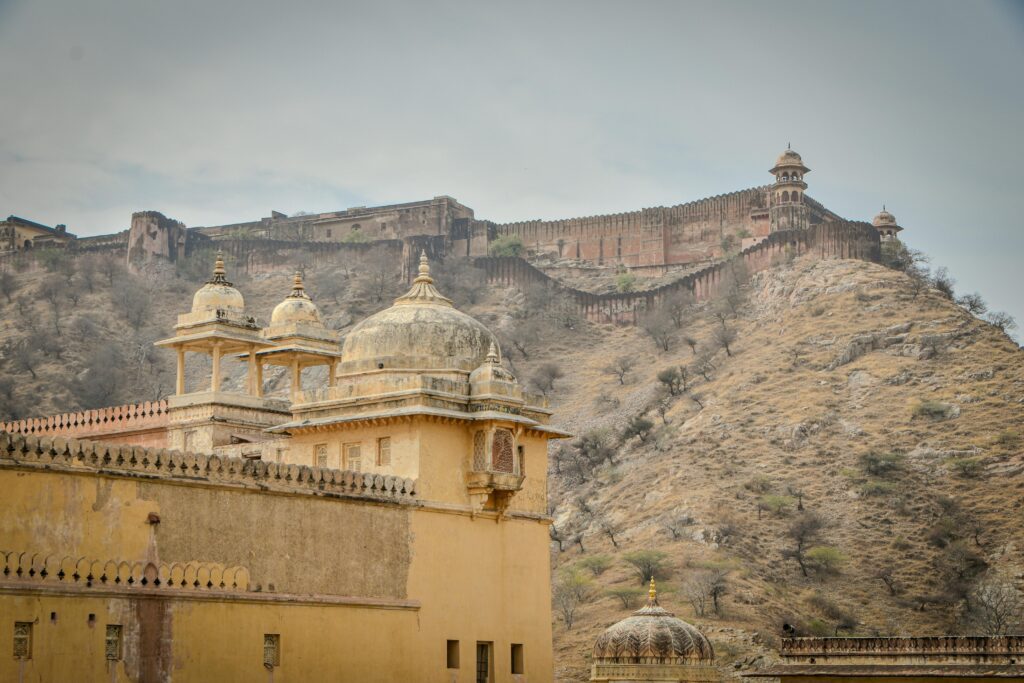
One of the most interesting architectural facts about the jaigarh fort is that the fort is located at the top of a hill.
This fort is constructed at an altitude of around 500 feet from the level of the surrounding region at a site called the ‘Cheel ka Teela’ or the Hill of Eagles, giving the fort a commanding panoramic sight of the surrounding region.
The architecture of the jaigarh fort perfectly harmonizes with the nature of the Aravalli hills.

Unlike other forts where the landscape had to be modified to construct the fortification structures, jaigarh fort architecture blended well with the rocks on which the fort stands. This not only added to the strength of the fort but also made the construction less vulnerable to attack.
On architectural grounds, its location on a hill was ideal for surveillance and communication with other forts, particularly Amber Fort. The knowledge about jaigarh fort starts with realizing how its location influenced every aspect of its architecture.
Giant Wall of the Fortress and Strong Architecture
Having very thick walls, Jaigarh fort boasts one of the strongest walls in Rajasthan. The walls are made up of sandstone, and they were intended to be very resilient. It is evident that the architecture is military-oriented.
In Jaigarh Fort, the architectural style emphasizes robustness and is less ornamental. All suites of lines are straight, and bastions and gateways are fortified.
In jaigarh fort, the architecture is strictly functional and emphasizes robustness over luxury and ornamentation.

The walls have loopholes and watch points where soldiers were able to defend the fort successfully. Indeed, the architectural design shows how the fort was well planned with advanced knowledge and expertise on the battlefield.
Learning about the jaigarh fort is essential in appreciating the architectural design in its defensive success.
Jaivan Cannon and Advanced Military Engineering
Among the most famous architectural sights of jaigarh fort is the “Jaivan Cannon,” which holds the title of the “largest wheeled cannon ever made.” This is the icon of military engineering in the Mughal-Rajput regime.
Jaigarh Fort architecture is designed with platforms that can withstand the weight and recoiling action of the Jaivan Cannon.
Jaigarh Fort architecture had been designed in such a way that it helped the cannon fire accurately. Around the site, water tanks have been incorporated that can be used to cool down the cannon after firing.
The presence of Jaivan Cannon cements jaigarh fort’s place as a military fortress. Learning about jaigarh fort architecture involves comprehension of weapon influence on architectural designs.
Water Management & Rainwater Harvesting Architecture
The jaigarh fort has one of the most progressive and intelligent designs, particularly with regard to water harvesting. The region in which jaigarh fort is built is a semi-arid region with water scarcity.
Since the fort was to remain isolated for several years, a sustainable water system was required for water to support a military population. This is one part of its intelligent design.
The design of the Fort also has a series of underground tanks, storage, or step wells, where the collected rainwater was channeled from the topmost surfaces. The stones were carved to channel the rainwater towards the storage tanks.
This way, the design ensured there was no wastage of rainwater, especially when the monsoons were short.
The large water tanks in the Jaigarh fort were built deeply underground to keep the water free from contamination and prevent its evaporation. This was ensured as the walls were made up of stone, keeping the water cool.
There were water tanks built deep within the fort to conserve the water from contamination and help in its retention in the fort.
The stepwells in the fort supported practical and architectural functions. The steps constructed in the well enabled people to access the water at different levels, depending upon the seasons.
The construction also served to add to the architectural sustainability of the fort by evenly distributing the weight of the architecture over the topography of the land. Knowledge about the jaigarh fort indicates that the water facilities in the fortress did not function independently.
Another interesting feature in the architecture for managing water in jaigarh fort is its relation to the Jaivan Cannon site.
Water stored in neighboring tanks was required to be cooled so as to cool the cannon after each fire in order to avoid any damage due to heat. It is indicative of very advanced knowledge in material science.
The water management systems in the jaigarh fort were not only functional but were designed to maintain cleanliness and functionality for daily use. There were water courses to drain any spare water away from the living areas, thus not affecting the architecture of the fort.
Analyzing the topic of fort, it is evident that the purpose of jaigarh fort also includes effective water management.
It is apparent that the design of jaigarh fort provides complete harmony between reservoirs, canals, and step wells, thus emphasizing that the design of jaigarh fort is only for purposes of defense and is completely sustainable.
Today, the conserved water systems of Jaigarh Fort remain impressive examples of engineering acumen from the past. They still aptly demonstrate how architectural planning and an insight into nature were combined with the requirements for defense purposes.
Palace, Courtyards, and Functional Architecture
jaigarh fort is no less famous for its military might, but the internal designs of the fort showcase the balanced design of the fort, which is the result of proper planning and the needs of both defense and living. The palace, court, and governmental buildings inside the fort were built not for the luxurious lifestyle of the people of that era but for the convenience of living. This is the aesthetic part of the jaigarh fort design.
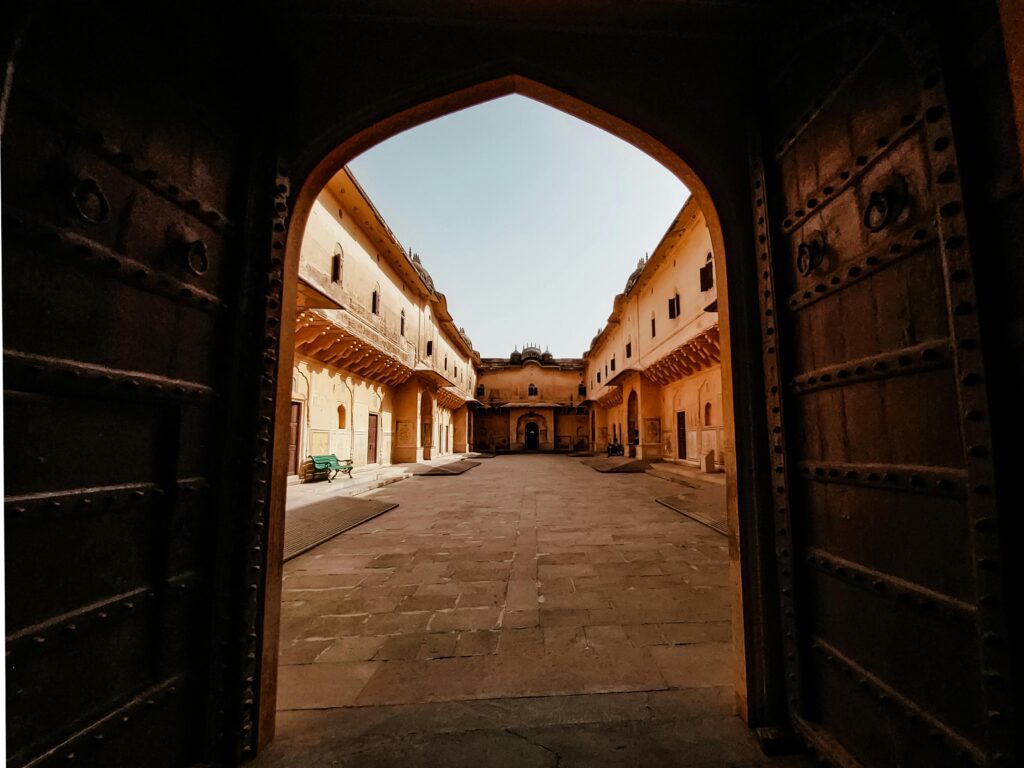
Laxmi Vilas, Vilas Mandir, and Aram Mandir are the most crucial structures within the boundaries of fort. These structures were used for the purpose of habitation and governance by the rulers and other officials who were stationed at the fort. Notably, the architecture of these structures is kept very austere to reflect the main purpose of the fort itself. That is, defense.
Jaigarh fort courtyards are of utmost significance when considering the architecture of Jaigarh fort. These courtyards were created with the sole aim of controlling temperatures, allowing air and natural light to enter the rooms. In a place like Rajasthan, which is associated with a rough climate, such a formation was necessary for comfort. Courtyards were also useful in organizing troops, meetings, and managing supplies.
The palace buildings in Jaigarh Fort are seen to have thick walls, providing protection from both extreme heat and extreme cold. The windows designed in a manner where they are small helped in allowing airflow without making them vulnerable to attacks from outside. The design of Jaigarh Fort architecture is thus important in understanding how the design was incorporated into adaptive features.
The functional architecture is again evident in the design of corridors and stairways in the fort. Corridors that were too small facilitated less movement, ensuring safety, while raised platforms ensured observation of courtyards and entry points. This ensured proper surveillance of activities inside the fort.
Each architectural feature has its specific design, ensuring that everything fits into its proper place while maintaining sense and order. This again illustrates how architecture helped in maintaining proper discipline among the people.
The interior designs of the palace buildings were functional rather than artistic. The use of stone floors, strengthened ceilings, and geometric designs is a reflection of jaigarh fort, which is a military structure.
The designs used in jaigarh fort will enable building structures to resist both natural and enemy attacks.
In summary, the palace and courtyards of the jaigarh fort are evidence of the role of architectural designs in supporting the governance and administration processes in a fortified city.
Research on jaigarh fort illustrates that architectural designs were not confined to the security of jaigarh fort but included establishing a sustainable living space.
Underground Passages and Secret Architectural Features
Among the most intriguing and significant features related to the strategic value of Jaigarh fort is the fact that the most interesting thing about this fort is hidden beneath its surface.
This is because the hidden passages and architectural designs found within the fort signify the advanced level of strategic designs and planning pertaining to security and safety.
Jaigarh Fort architecture also comprises an underground tunnel network that connects it and Amber Fort directly.
This underground tunnel was an important aspect when it came to creating communication and movement between both forts.
During times of an attack or siege, it was easier using this tunnel because it provided safety while traversing without having access by the attacking forces. This aspect is important when it came to maintaining secrecy in architectural aspects.
Construction of the underground tunnels proves the exceptional engineering acumen the Italians possessed. These tunnels were constructed with exact dimensions for structural safety and to avoid detection.
Narrow tunnel widths restricted the movements of the enemy during infiltration missions for the Italians. Curved tunnel routes also ensured the safety of the Italians by concealing their tunnels from the enemy sight.
Ventilation is also one aspect of fort’s underground design that played a very important role. Slight ventilation shafts were incorporated into the design of the passages to facilitate airflow.
Ventilation shafts were incorporated into the design of the fort to facilitate airflow and ensure that the inhabitants were not asphyxiated. They were incorporated into the design to ensure that they were well concealed within the fort.
Lighting in the underground passages was also carefully considered. Oil lamps were held in niches in the walls so that soldiers could move through the passage even at night.
These niches were evenly distributed, revealing careful building design. The fact that the niches were carved out and lasted so long also highlights care in building underground structures.
In addition to the tunnels, the Jaigarh Fort also houses secret chambers or chambers intended for storage, intelligence work, or as shelters. The chambers were usually hidden behind thick walls or under courtyards.
They were impossible to spot while outside. Their designs were meant for concealment, featuring small openings, thick ceilings, and resistance to structural stress.
Knowledge about the Jaigarh fort develops more meaning when investigating the secret architectural designs.
These designs demonstrate the use of architecture as an instrument of strategy, through the provision of safety through invisibility.
Unlike the surface architectures that solely relied on visibility and strength, the underground structures relied on secrecy, accuracy, and planning.
“The secret tunnels and passages of Fort are a symbol of the mindset of a civilization that believed in preparedness and foresight.” Such designs of the architecture worked towards ensuring that the fort was operational under the most adverse conditions.
Today, these are mute bearers of the fact that architecture, apart from the desire to be grand, was also aimed at intelligence, survival, and functionality.
The Architecture of Jaigarh Fort: The Heritage Monument of Today
Today, Jaigarh Fort is a significant piece of heritage architecture that is revered for its majestic design and history. The preservation of Jaigarh Fort ensures a genuine experience of Rajput military architecture.
The museums and open spaces within the forts offer artifacts, weapons, and architectural features which recreate its historical background. Its conservation is centered on maintaining its structure while using its original material.
As an important historical site, fort remains an important educative place regarding historical architecture and planning with regard to sustainable engineer approaches.
Architectural Style and its Historicism
The architectural style of Fort depicts the pure form of Rajasthani military architecture. The decorations are minimal, and the buildings are massive, which aptly defines the philosophy of architecture.
jaigarh fort has played a vital role in protecting Amber and controlling the region. The architectural signs of the jaigarh fort display dominance. Every ruler added to the expansion of the fort and kept the architectural vision intact.
Knowledge of the jaigarh fort can help associate architectural details with the historic event, making the monument an indispensable part of history.
The Cultural and Strategic Significance of Jaigarh Fort
Jaigar
The Jaigarh Fort is a metaphor for strength, resilience, and foresight in Rajput culture. This is because its architecture is a reflection of qualities like fearlessness, preparedness, and allegiance
The fort’s strategic location was important for dominance over routes and regional security. The historical and military importance to the culture raises jaigarh fort’s relevance as an icon of the royal heritage of Rajasthan.
Visitor Experience and Conservation Efforts
Contemporary conservation efforts involve the preservation of the original architectural designs found in the jaigarh fort. This is achieved by the use of materials during the restoration process.
Public routes and info displays help to improve knowledge while covering potential damage to sensitive architectures. All measures are taken to keep Jaigarh fort sound and true to its historical authenticity.
Conclusion
Jaigarh Fort is a shining example of the strategic genius and architectural smarts that characterized the Rajput era. Unlike most forts, which showcased elegance and ornamentations, the jaigarh fort was built with a purpose—where might and functionality dominated the architectural designs.
The strategic location on the Aravalli Hills and the sheer structures clearly show how architecture could be harnessed as a tool of defense. The architecture of jaigarh fort is a testament to its makers’ thorough understanding of terrain, climatic conditions, and warfare.
The large walls, bastions, and entrances of the fort were much more than just barriers to entry; they were vastly sophisticated structures to endure siege warfare. Modern amenities like secret passages, hidden tunnels, and observation points in jaigarh fort prove how its architecture incorporated more than just the construction of visible monuments.
One of the things that is most remarkable about the jaigarh fort is the sustainable design of the fort. This is seen in the rainwater harvesting systems, the reservoirs, and the step wells that show a level of foresight and environmentalism that is not seen in its time.
This level of sustainability in the design of the fort made jaigarh fort the pacesetter in sustainable military designs. The palaces and administrative buildings inside the fort stand as further testament to it being an integrated military base rather than a basic defending outpost.
Such buildings took functionality and ease of living into consideration so as not to negate safety factors at the same time. The effect of climatic control in the buildings was the result of clever architecture to suit the conditions prevailing in Rajasthan.
Knowledge of jaigarh fort history offers quite interesting insights into the development of Rajput defensive architecture and its impact on other forts in Northern India.
In terms of its architecture, jaigarh fort is remarkable because its consistency demonstrates that it was built on the same philosophy of being formidable and prepared.
This architecture persists and expresses the qualities of being disciplined and foresighted, which are reflected in its ruling families. The jaigarh fort symbolizes architectural brilliance till date.
The preserved structures of jaigarh fort are an inspiration for future generations to learn about the expertise behind ancient Indian engineering.
As a heritage monument, the architecture of jaigarh fort also symbolizes the perfect amalgamation of design, strategy, and sustainability, making it one of the most impressive forts in Rajasthan.
Alright dudes! Check out bet69us! Seriously, I’ve been hitting it big there lately. Good vibes all around. Definitely worth a look if you’re trying to make some extra cash.
Heard some buzz about 9apisoph. Took a peek, and I’m intrigued. Might be something cool there. Investigate it at 9apisoph.
Really impressed with the game variety here. I spent the whole weekend exploring the lobby and everything just works perfectly. Highly recommended for anyone who loves variety. t89online