
Table of Contents
Introduction
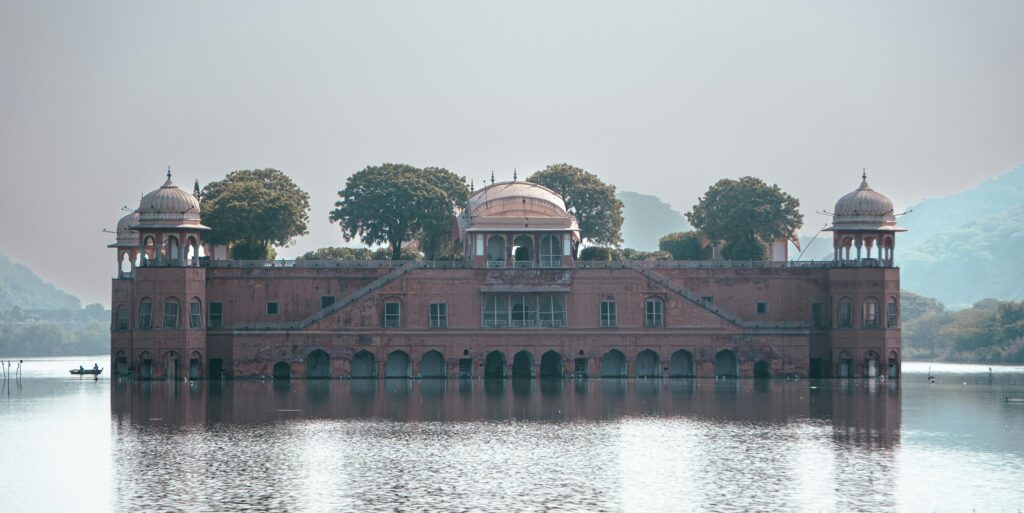
Jal Mahal, commonly known as the “Water Palace,” is one of the most popular heritage buildings of Jaipur, the magnificent city of Rajasthan.
Situated in the center of the picturesque Man Sagar Lake, Jal Mahal is an exemplary display of Rajput and Mughal architectural styles that blend perfectly with the surrounding environment.
This special characteristic of Jal Mahal qualifies it as one of the major palace attractions and an architectural heritage of Jaipur.
Knowing about will make one appreciate how resourcefully it was built. Unlike other traditional buildings such as forts and palaces, Jal Mahal is partly under water, creating a magic illusion that it is levitating on water.
This is not only a demonstration of how resourcefully buildings were constructed in those days, but it is also a sight to behold.
The palace has architectural significance; it gives information on royal history and culture in Rajasthan. The palace was designed to act as a summer resort and hunting ground for the royal family, and this can be deduced from its architecture, which entails its recreational and planning aspects.
Conservation efforts on this palace show its significance to preserve old structures while accommodating tourism requirements.
Historical Background of Jal Mahal
Jal Mahal was originally built in the 18th century during the reign of Maharaja Madho Singh I.
This palace was meant to serve as a summer palace for the ruler, who could get respite from the scorching sun and enjoy the lake and gardens surrounding this palace.
Through the centuries, there have been several periods of renovation and expansion of that, during which architectural styles of both Rajput and Mughal periods were imbibed.
Looking into its historic background is essential to understand Jal Mahal’s dual role of being a tourist palace and a royal protective structure. Even though Jal Mahal is a pleasure palace, its positioning in the center of Man Sagar Lake creates natural barriers to protection.
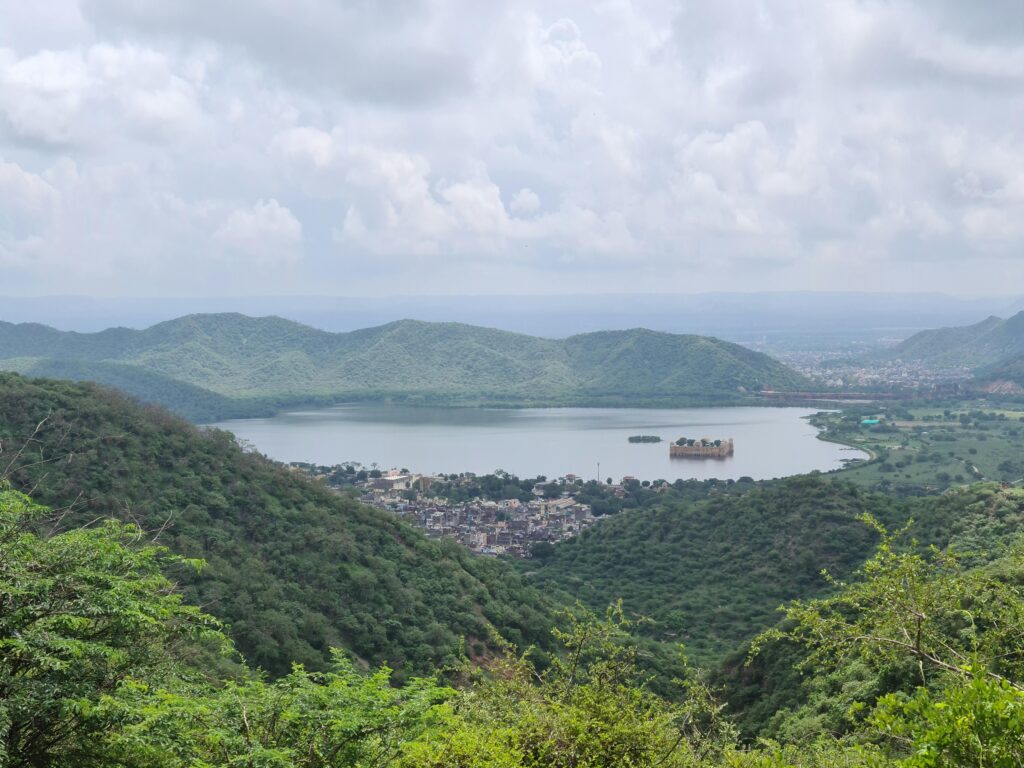
Water walls around the structure along with entry/exit points ensure protection while the environment is also aesthetically pleasing.
The historical significance of the palaces is increased by their linkage to the development of the city of Jaipur.
The Maharaja Sawai Jai Singh II, who established Jaipur, is the force behind the development of the city and its periphery.
The role played by in the royal lifestyle is immense, as it provided an escape where there was comfort, luxury, as well as safety.
The history surrounding Jal Mahal is also connected to the significance of the environmental heritage of the Man Sagar Lake. It can thus be said that the environmental heritage reflected through the remarkable example of the Jal Mahal and the Man Sagar Lake in Jaipur represents a significant feature that historically relates to the environmental landscape that was created for defense strategies.
Knowledge regarding Jal Mahal increases awareness about the use of environmental landscapes by royal families to improve the accessibility to defense as well as recreational sites through the creative use of nature by the rulers in earlier years.
Architectural Marvel of Jal Mahal
Jal Mahal is famous for its architectural genius. This palace is a magnificent amalgamation of Rajput as well as Mughal architectural styles,
featuring ornate frontage, carved balconies, and carvings coupled with the ingenious architectural designs capable of bearing the weight of water despite being partially submerged.
This semi-subterranean palace is made of sandstone with pleasing jharokhas and symmetrical design.
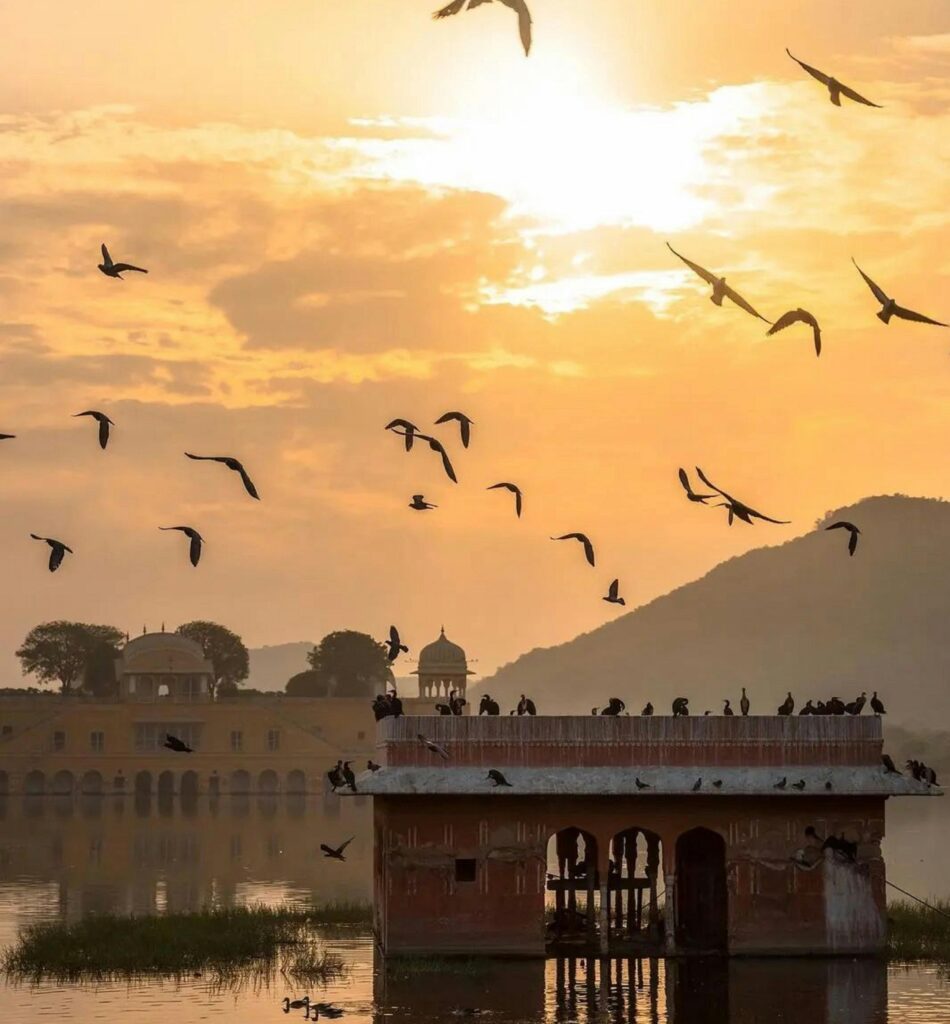
In fact, it is evident that the palace was built in a manner that reflects sophisticated engineering, especially when one considers it is from the 18th century.
The palace is built in such a way that it is resistant to water pressure, and its walls are also made of materials that are water-resistant.
Inside, Jal Mahal consists of beautiful courtyards, terraces, and ornamental areas, although the interiors are not open to visitors.
In the architecture, symmetry and majesty are expressed through the terraces and balconies that are visible, and Mughal styles are expressed through decorations and floral designs.
Location and Unique Lake Setting
One of the remarkable things about the Mahal palace is the fact that it sits right in the middle of the Man Sagar Lake, giving the palace an identity of its own when it comes to location.
With the Aravalli hills surrounding the lake, the serenity of the surrounding creates the image of the palace floating on the surface of the water. This itself acts as an added attraction for the tourist palace.
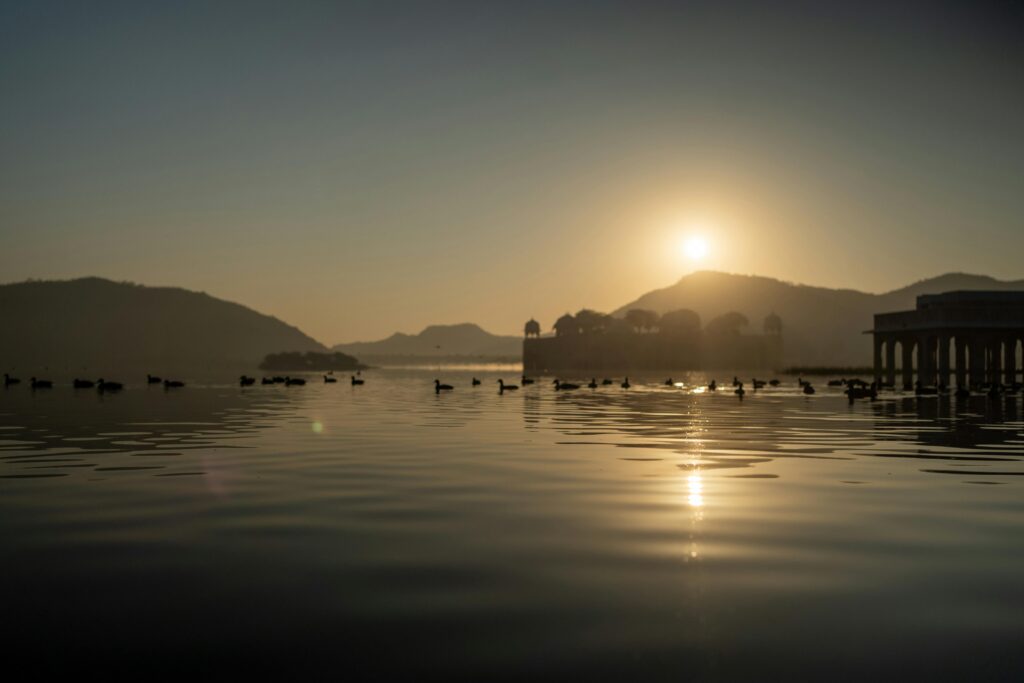
The integration of Jal Mahal and the lake needs special planning and expert engineering techniques.
The partially water-reclaimed walls are designed in such a manner that they can withstand water pressure alongside providing stability to the structures.
The design of Jal Mahal’s teracces, balconies, and arched windows ensures a perfect reflection of the Surya Sindri Lake, providing a spectacular sight, especially at sun rise and sunset time.
Lake environments are also a source of biodiversity, with migratory birds and other organisms being drawn here.
Tourists appreciate visiting this site, taking in both its heritage architecture and environment, making Jal Mahal an ideal case study in how architecture must blend with its surroundings.
Knowledge in this regard regarding Mahal helps in appreciating how its surroundings increase its importance.
Restoration and Conservation Efforts
Jal Mahal has been the subject of many difficulties throughout the centuries because it resides in the midst of Man Sagar Lake. Water and weather have caused damage to the structure and intricate design of this historic landmark.
Recognizing the value it holds and its importance to history and the environment, many renovations and conservation efforts have been made for future generations.
The restoration process, initiated by the Jaipur Development Authority and conservation experts, targeted several important areas.
The structural restoration of the partially subterranean foundation of the palace was an important task to protect it from any water damage in the future.
The use of traditional materials like sandstone and appropriate methods were adopted wherever possible to retain the original form of the design of Jal Mahal.
In addition, the surrounding environments of the Man Sagar Lake were subjected to a considerable degree of ecological restoration.
Measures such as the removal of silt, purification of water, and the land scape of the lake shores facilitated the restoration of the natural surroundings, and finally, the palace could again seem as if it is floating majestically above the clean water surface.
Another crucial area of renovation for the decorative works of terraces, balconies, and carvings on the facade of the building contributed significantly to the restoration of the aesthetic appeal of the palace.
Skilled artisans well-versed in the art of traditional Rajput and Mughal carvings were employed to restore the elaborate designs to enable the public to admire the architectural beauty of the palace.
The knowledge about restoration work done at Jal Mahal contributes to recognizing that a restoration process requires a balance between history and modern means. In restoring both building and nature, Mahal has become a sustainable icon of how historical places should be preserved.
The restoration work has not only improved its look, making it a popular tourist destination palace, but also increased its importance as one in Jaipur.
Flora, Fauna, and
Jal Mahal is not only an architectural wonder but is also recognized as an ecotourism site, given that the palace is located in the center of Man Sagar Lake.
The flora and fauna that thrive in the surrounding environment of the lake make Jal Mahal an exclusive site that is a combination of heritage architecture and natural wonders. When visiting Mahal, tourists can come across birds that migrate to the lake during the winter season, including herons, egrets, kingfishers, and cormorants.
Jal Mahal is surrounded by green patches as well as aquatic vegetation. These green patches serve to maintain a balance in the environment of the place.
They also enhance the beauty of the Jal Mahal Palace. Green patches around Jal Mahal Palace tend to offer a wonderful combination of the architectural beauty of the Palace and its surrounding environment. This is a result of the incredibly wise design made by Jal Mahal designers.
Eco-travel projects surrounding and related to Jal Mahal are concerned with preserving the lake and spreading awareness about biodiversity.
Visit and watch points enable tourists to engage in bird watching and learn about the significance of preserving the surrounding habitat of the palace.
This increases the experience of the tourist with the additional knowledge that the palace of Jal Mahal is not merely a tourist site; on the other hand, it represents effective management of heritage.
Presence of vegetation and wildlife is an additional factor for this experience. The reflection of birds, vegetation, and hills in Man Sagar Lake add to the scenic beauty of this place and make it ideal for photography and visiting as well.
Knowledge of Jal Mahal in this respect will assist visitors to understand how architecture and nature can come together to provide an experience of tranquility and richness associated with culture as well.
Tourist Experience and Attractions
Jal Mahal Palace is also one of the most frequently visited tourist palace destinations in Jaipur, which provides an ideal blend of historical architecture, natural landscapes, and rich historical significances.
Although it is not possible to enter the palace due to the sensitive architecture of the building, it provides excellent vantage points for views from the banks of the Man Sagar Lake.
The experience of coming to begins right from when you approach it via the lake on which it seems magically floating.
This is especially so early in the morning or during the evenings when it is ideally reflected in the light of the lake, thereby forming an enchanting mirror image of Jal Mahal. This is what makes Jal Mahal an absolute point of interest to all-visitors.
Also, there are several nearby attractions adding to the experience, where tourists can discover the diverse culture of Jaipur. The close proximity to Amber Fort, Nahargarh Fort, and the traditional markets of Jaipur makes it a part of the tourism circuit. Tourists usually visit here together, learning more about the royal lifestyle and architecture in Rajasthan.
Facilities for tourists around Mahal, such as view points, sitting areas, and guided tours, add value to the tourist experience without compromising the historical integrity of Jal Mahal.
Bird watching and nature observation in Man Sagar Lake introduce an eco-tourism component, thus creating a diverse experience that combines recreation, learning, and cultural experience.
Knowledge about Jal Mahal in relation to tourism helps in realizing how architecture, history, and natural environment come together in creating an enjoyable experience.
The fact that the palace is architecturally designed in such a manner as to blend with its environment, which is its natural setting in the lake, is what helps in creating this immersive environment.
Thus, Jal Mahal is a one-of-a-kind experience for tourists as it is both aesthetically satisfying and rich in culture. Mahal is a landmark where architecture, royal history, and integration with nature come together at one single point, making it one of Jaipur’s most memorable tourist palaces.
Cultural Significance and Symbolism
Jal Mahal is more than an architectural wonder; it is an iconic representation of the cultural heritage of Jaipur and the ingenuity and genius of the royal rulers of Rajasthan.
Water palaces such as Jal Mahal have immense significance in the cultural heritage of Rajasthan, representing opulence, pleasure, and the symbiotic blending of man-made structures with nature.
The distinct position of Jal Mahal in the midst of Man Sagar Lake adds largely to its symbolism because it embodies serenity and beauty in its cultural and architectural forms.
Palace architecture with terraces, arched balconies, and carvings demonstrates the aesthetic taste of that period with an emphasis on Rajput and Mughal architectural traditions.
There’s meaning to every feature of Jal Mahal—with symmetry and proportions that define balance, the water around it which marks purity and life, to carefully crafted facades that illustrate rulers’ adherence to aesthetic superiority.
Jal Mahal has been a source of inspiration for a multitude of artists, photographers, and directors, becoming a key motif in Rajasthan culture. This is partly attributed to the fact that Jal Mahal is used to represent the royalty of Jaipur, adding to its importance within tourism circles.
Jal Mahal is, therefore, a testament to historical sophistication. Information about Jal Mahal further educates that the palace is involved in education and preservation of cultures.
Jal Mahal gives tourists the opportunity to learn more about traditional architectural designs, the lifestyle of royalty, and how the palace is intertwined with nature. The palace is an embodiment of the lifestyle and values of the Jaipur royalty, which is more than just beautiful.
In short, Jal Mahal is more than just a building; rather, it is a landmark that transcends the realms of history, art, and architecture.
It is a significatory landmark which has the ability to invoke admiration and cultural pride in the hearts of people, while also retaining the heritage of Rajasthan. It is one of the most revered tourist palaces in India.
Conclusion
Jal Mahal is more than just an architecture; it is a living proof of the genius, creativity, and richness that is a part of the royal heritage of Rajasthan. Strategically located in the center of the Man Sagar Lake, Jal Mahal is a spectacular example of the perfect blending of architecture and nature, and how ancient structures were designed and integrated with nature.
Its semi-submerged state, complexities, and natural surroundings make Jal Mahal one of the most interesting tourist palaces in Jaipur.
The historical importance of Jal Mahal is not just limited to its architectural significance and scenic beauty. Dating back to the 18th century and designed by Maharaja Madho Singh I, Jal Mahal was used as an elite summer resort and hunting place for the royal family.
The major significance of this architecture lies in the fact that it represents how royals of that time were very much concerned with luxury as well as functionality. Knowledge and awareness regarding Jal Mahal will make one understand why and how the “water palaces” represented much more than just an idle pleasure for the elite classes.
In terms of architecture, Jal Mahal is an example of a wonder in Rajput and Mughal architecture, with symmetrical terraces and carved facades. This palace is an example of how architectural innovations in history could have contributed to creating visually pleasing buildings like Jal Mahar, as if floating on its surroundings.
Through restoration and conservation, the palace has maintained its originality and continues to do so and remains one of the tourist attractions in its original form.
In addition to architecture, there is environmental and cultural significance too to the Jal Mahal. In this context, the environmental significance of the structure comes from the fact that the surrounding Man Sagar Lake creates a habitat for several migratory birds and other forms of life.
This means that the structure has become a focal point for ecotourism and environmental learning. Essentially, Jal Mahal represents the beauty, creativity, and foresight of the royal architects of Rajasthan.
Inspiring awe, educating people about the lifestyles of the past, and leaving a sustainable ecological footprint make Jal Mahal one of the most striking tourist palaces in India.
Jal Mahal serves as a reminder of the coming together of architecture, nature, and culture to create an iconic site which continues to fascinate people’s imagination even after so many years of its existence.