
Table of Contents
Introduction to Chittorgarh Fort
Chittorgarh Fort stands as one of the most iconic symbols of Indian history, valor, and architectural brilliance.
Located in the state of Rajasthan, It is widely recognized as a legendary tourist destination and a monumental representation of Rajput pride. Known internationally as benteng chittorgarh, this massive hill fort reflects centuries of sacrifice, courage, and royal heritage.
Spread across a vast plateau, Chittorgarh Fort dominates the surrounding landscape with its massive walls, gateways, palaces, and temples.
The fort is not merely a historical structure but a living testimony to India’s medieval past.
Its strategic location, artistic excellence, and emotional legacy make Fort a unique tourist destination that attracts historians, architects, and cultural enthusiasts from across the world.
Historical Significance of Chittorgarh Fort
The historical importance of Fort dates back over a millennium. It served as the capital of the Mewar kingdom and played a central role in shaping Rajput history.
The Fort witnessed numerous battles, invasions, and heroic sacrifices, making it one of the most historically significant forts in India.
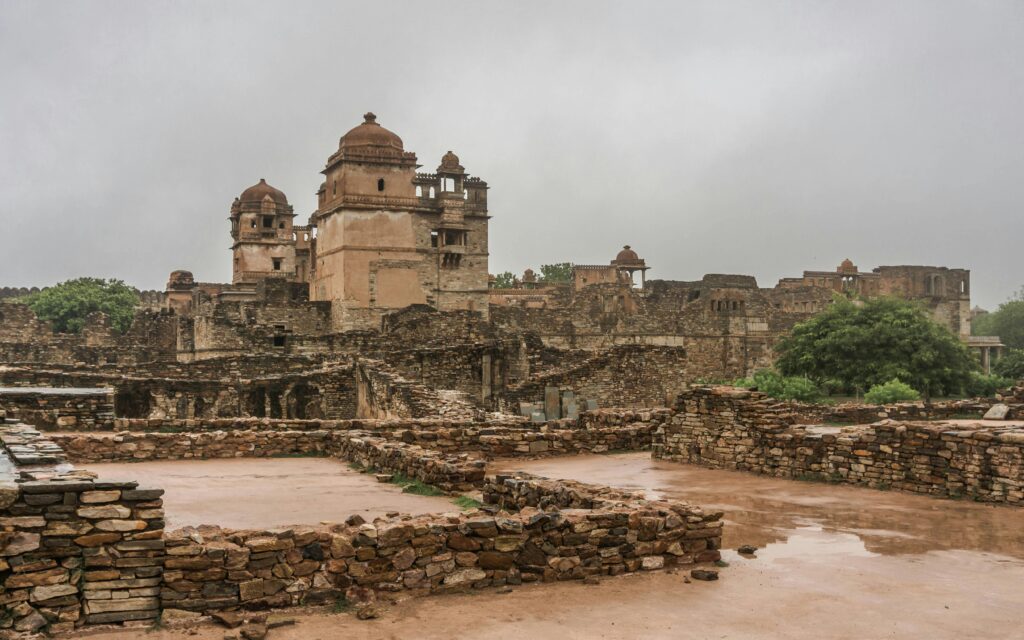
Benteng Chittorgarh was ruled by several Rajput dynasties, most notably the Sisodias of Mewar.
The fort became a symbol of resistance against foreign invasions, especially during attacks by Alauddin Khilji and other rulers.
Each invasion left behind stories of bravery that elevated Fort to legendary status.
The fort’s long and turbulent history transformed it into more than a military structure.
It became a cultural and emotional stronghold, representing honor, sacrifice, and loyalty. Its historical depth makes it a priceless heritage tourist destination.
Architectural Grandeur of Chittorgarh Fort
The architectural magnificence of the Fort is one of its most striking features. Built atop a hill approximately 180 meters high, the fort covers an area of nearly 700 acres.
The design of benteng chittorgarh reflects advanced military planning and artistic excellence.
The fort is protected by massive stone walls stretching for kilometers, with seven grand gates known as pols. These gateways were designed to slow down invading forces and protect the inner city.
The architectural planning of Fort demonstrates a deep understanding of defense, geography, and sustainability.
Within the fort, palaces, towers, temples, and water reservoirs display a blend of Rajput and ancient Indian architectural styles.
The use of stone carvings, symmetrical layouts, and elevated platforms contributes to the grandeur of Chittorgarh Fort as a historic tourist destination.
Chittorgarh Fort as a Symbol of Rajput Valor
Fort is inseparable from the tales of Rajput valor and sacrifice. It stands as a symbol of courage, honor, and unyielding resistance.
The fort is deeply associated with the tradition of jauhar, where Rajput women chose self-sacrifice over surrender.
The most well-known legend associated with Chittorgarh Fort is that of Rani Padmini. Her story has immortalized the fort as a place of supreme sacrifice and dignity.
Benteng Chittorgarh witnessed three major jauhar events, each reinforcing its identity as a sacred symbol of Rajput bravery.
These acts of valor transformed Fort into a legendary tourist destination, not only for its physical structure but for the powerful emotions and values it represents.
Major Attractions Inside Chittorgarh Fort
Fort houses several remarkable structures that contribute to its fame as a major tourist destination.
Among them, Vijay Stambh (Tower of Victory) stands as a masterpiece of Rajput architecture, celebrating military success and artistic excellence.
Another important landmark is Kirti Stambh, dedicated to Jain philosophy and adorned with intricate carvings.
The fort also contains palaces such as Rana Kumbha Palace, Padmini Palace, and Fateh Prakash Palace, each reflecting royal lifestyle and historical events.
Numerous temples, stepwells, and water reservoirs within benteng chittorgarh demonstrate the fort’s self-sustaining design. These attractions collectively make Chittorgarh Fort a complete historical and architectural tourist destination.
Religious and Cultural Importance of Chittorgarh Fort
Religion played a significant role in the daily life within Fort. The fort houses several Hindu and Jain temples, highlighting religious harmony and spiritual devotion. These sacred structures elevate the cultural importance of benteng chittorgarh.
Temples such as Kalika Mata Temple and Meera Temple reflect devotional traditions that continue to influence regional culture. Meera Bai’s association withFort adds spiritual depth, making it a pilgrimage-linked tourist destination.
The fort served as a center for festivals, rituals, and royal ceremonies, reinforcing its role as a cultural nucleus of Mewar. The coexistence of spirituality and royalty strengthens the cultural value of Fort.
Natural Setting and Strategic Location
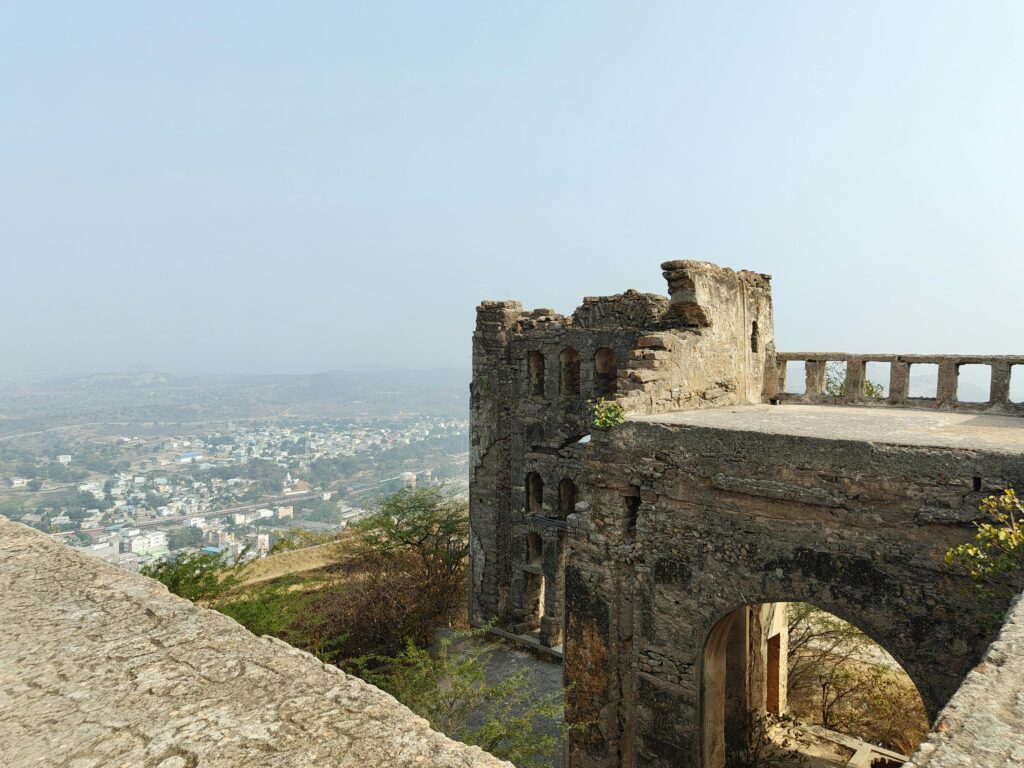
The strategic hilltop location of Fort played a vital role in its defensive strength. Surrounded by plains and rivers, the fort offered a panoramic view of approaching enemies. This natural advantage made benteng chittorgarh nearly impregnable.
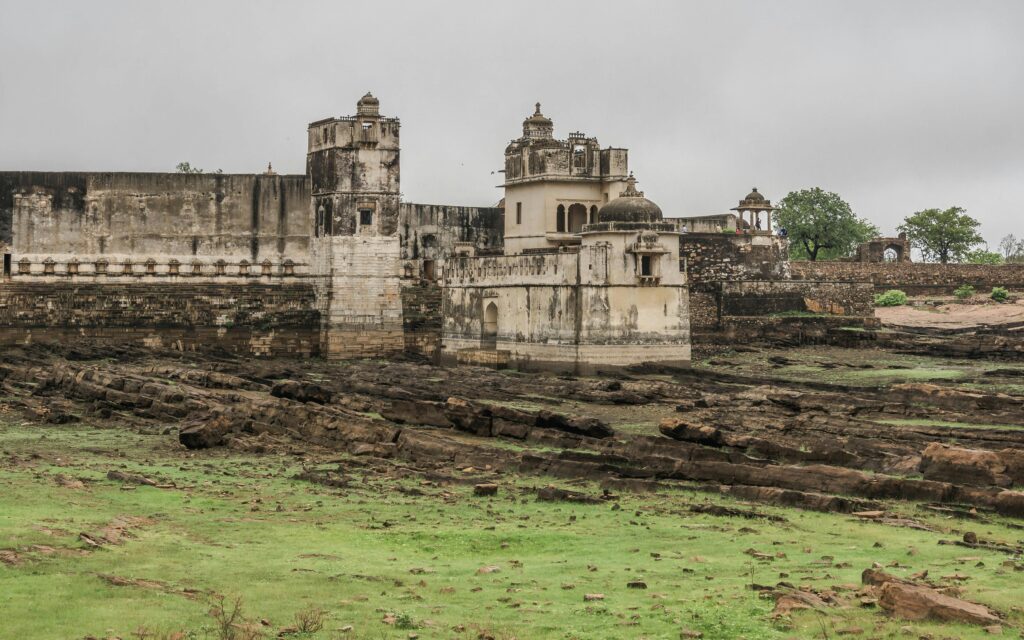
The elevated terrain also influenced architectural planning, including rainwater harvesting systems and storage tanks. These systems ensured water availability during long sieges, reflecting advanced planning.
The harmony between natural landscape and fort design enhances the appeal of Fort as a scenic and historical tourist destination.
Chittorgarh Fort as a UNESCO World Heritage Site
Chittorgarh Fort is recognized as a UNESCO World Heritage Site under the group of Hill Forts of Rajasthan. This recognition highlights its universal cultural value and historical importance.
The UNESCO status of benteng chittorgarh has helped preserve its structures and promote global awareness. Conservation efforts focus on protecting architectural details while maintaining historical authenticity.
This international recognition strengthens the position of Fort as a globally significant tourist destination.
Tourism Experience at Chittorgarh Fort
The tourism experience at Chittorgarh Fort is both immersive and educational, offering visitors a deep connection to India’s medieval history and cultural heritage.
As one of Rajasthan’s most prominent heritage sites, It stands out as a comprehensive tourist destination that combines historical exploration, architectural appreciation, and cultural understanding within a single expansive landscape.
Upon entering benteng chittorgarh, visitors are immediately struck by the sheer scale of the fort. The vast area encourages unhurried exploration, allowing travelers to move through gateways, courtyards, palaces, and temples that narrate centuries of history.
The open layout of Chittorgarh Fort enables visitors to experience the fort as a once-living city rather than a confined monument.
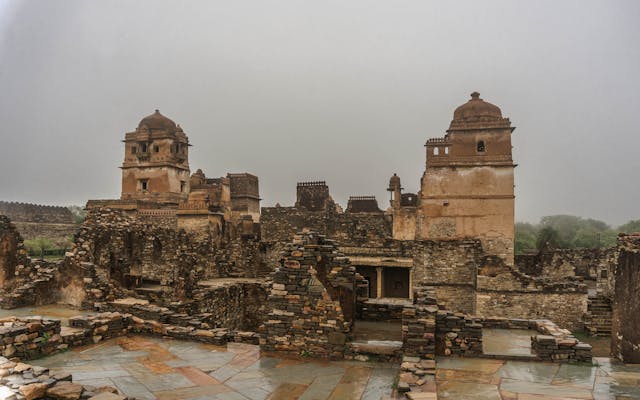
Guided tours play a significant role in enhancing the tourism experience at Chittorgarh Fort.
Knowledgeable guides provide detailed insights into historical events, architectural features, and cultural traditions associated with benteng chittorgarh.
These narratives transform stone structures into meaningful historical chapters, deepening the visitor’s understanding of the fort’s legacy.
One of the highlights of the tourism experience is the visual grandeur of Fort. Panoramic views from elevated points within the fort offer sweeping vistas of the surrounding plains, reinforcing the strategic importance of its location.
These scenic perspectives add aesthetic value, making Chittorgarh Fort a visually rewarding tourist destination.
Cultural interpretation further enriches the tourism experience. Informational displays, heritage walks, and evening illumination programs help convey the fort’s historical and cultural significance.
Such initiatives allow visitors to engage with benteng chittorgarh beyond surface-level sightseeing, encouraging deeper appreciation of its heritage.
Facilities within and around Chittorgarh Fort support extended visits, allowing travelers to explore the site comfortably.
The structured movement paths ensure that major attractions are accessible while preserving the historical integrity of the fort.
These thoughtful arrangements enhance the overall experience without diminishing the authenticity of the site.
In essence, the tourism experience at Fort offers a balanced blend of education, exploration, and cultural immersion.
As a renowned tourist destination, benteng chittorgarh continues to captivate visitors by presenting history not as distant memory but as a tangible and meaningful experience preserved within its monumental walls.
Hidden Facts and Lesser-Known Secrets of Chittorgarh Fort
Beyond its well-documented history and famous legends, Chittorgarh Fort holds numerous hidden facts and lesser-known secrets that add depth to its identity.
These elements, often overlooked by casuala visitors, reveal the complexity of benteng chittorgarh and highlight why it remains a subject of fascination for historians and scholars.
One of the lesser-known aspects of Fort is its vast network of ancient water management systems. The fort contains numerous reservoirs, stepwells, and tanks designed to store rainwater and sustain life during prolonged sieges.
These systems reflect advanced engineering knowledge and demonstrate how benteng chittorgarh functioned as a self-sufficient city rather than just a military structure.
Another intriguing feature of Chittorgarh Fort is the existence of hidden passages and strategic corridors.
Some of these pathways were built for emergency escape, while others allowed discreet movement within the fort during times of conflict.
Although many of these passages are no longer accessible, their presence highlights the tactical sophistication embedded in the fort’s design.
Chittorgarh Fort also contains architectural symbolism that remains largely unexplored.
Certain carvings, temple alignments, and spatial arrangements are believed to follow astronomical and spiritual principles.
These elements suggest that benteng chittorgarh was designed with cosmic harmony in mind, a concept deeply rooted in ancient Indian architectural philosophy.
Local traditions also speak of chambers and areas within Chittorgarh Fort that were reserved for meditation, learning, and religious discourse.
These spaces reflect the fort’s role as a cultural and intellectual center, not merely a battlefield. Such lesser-known functions add another layer to the fort’s historical significance.
There are also myths surrounding unexplored underground structures beneath Fort. While concrete archaeological evidence is limited, these stories contribute to the fort’s mystique and continue to intrigue researchers.
These legends reinforce the idea that benteng chittorgarh still holds secrets waiting to be fully understood.
Overall, the hidden facts and lesser-known secrets of Chittorgarh Fort enrich its identity as more than a famous monument.
They reveal a complex, multilayered structure that blends military strategy, cultural life, and symbolic design. These unseen dimensions strengthen of Fort’s reputation as a profound historical site and an intellectually engaging tourist destination.
How to Reach Chittorgarh Fort
The Fort is well-connected by road and rail. The city of Chittorgarh serves as the main access point for benteng chittorgarh.
Its accessibility enhances its popularity as a domestic and international tourist destination.
Best Time to Visit Chittorgarh Fort
The best time to explore the Fort is during cooler months when the climate supports extended exploration. Seasonal conditions significantly influence the visitor experience at this expansive tourist destination.
Cultural Importance of Chittorgarh Fort Today
Chittorgarh Fort holds an unparalleled place in the cultural heritage of Rajasthan and India as a whole. More than a historical monument, the Fort represents a living cultural legacy shaped by centuries of tradition, valor, and artistic expression.
The fort has long served as a cultural nucleus where royal customs, religious devotion, and social values evolved together, forming a distinct Rajput identity.
The cultural influence of benteng chittorgarh is deeply rooted in the ideals of honor, sacrifice, and loyalty. These values were not only reflected in warfare but also expressed through rituals, festivals, and everyday life within the fort.
Royal ceremonies, coronations, and religious observances were conducted according to strict traditions, reinforcing a culture centered on discipline and dignity. the Fort thus became a symbol of cultural integrity that extended beyond its physical boundaries.
Art and architecture played a significant role in shaping the cultural landscape of Chittorgarh Fort. Palaces, temples, and victory towers were designed not just as functional structures but as expressions of cultural pride.
The intricate carvings, inscriptions, and sculptural elements found throughout benteng chittorgarh depict mythological scenes, spiritual symbols, and historical events. These artistic details serve as visual records of cultural beliefs preserved through generations.
Religion formed another cornerstone of cultural life at the Fort. The presence of Hindu and Jain temples within the fort complex highlights the coexistence of diverse spiritual traditions.
Temples dedicated to deities such as Kalika Mata and Meera Bai illustrate the devotional practices that influenced music, poetry, and philosophy. Meera Bai’s association with Chittorgarh Fort enriched its cultural identity, blending royal life with spiritual expression.
Festivals and cultural gatherings further strengthened the social fabric of the fort. Seasonal celebrations, religious observances, and public rituals brought together the royal family and common people, fostering a shared cultural consciousness.
These traditions helped transmit values and customs across generations, ensuring cultural continuity even during times of conflict.
In the present era, of the Fort continues to shape cultural awareness and historical education. As a renowned tourist destination, it serves as a gateway for visitors to understand Rajput culture, ethics, and artistic heritage.
Cultural performances, heritage studies, and historical narratives associated with benteng chittorgarh keep its traditions alive in contemporary society.
Overall, the cultural importance of the Fort lies in its ability to preserve and reflect a civilization’s collective memory.
Through its traditions, art, religion, and values, of a Fort remains a powerful cultural symbol—one that continues to influence identity, heritage appreciation, and historical understanding across generations.
Conclusion: Why Chittorgarh Fort Remains a Legendary Tourist Destination
The Fort stands as an enduring symbol of India’s historical depth, architectural brilliance, and unbreakable spirit.
More than a massive stone structure, of the Fort represents centuries of courage, sacrifice, and royal dignity that shaped the cultural identity of Rajasthan.
Its commanding presence on a hilltop continues to dominate the landscape, just as its legacy dominates the historical consciousness of the nation.
The emotional significance of benteng chittorgarh lies in the values it represents. The fort is inseparably linked with tales of Rajput valor, honor, and self-sacrifice, making it one of the most powerful historical landmarks in Indian history.
These stories are not confined to legend alone but are deeply embedded in the physical spaces of the Fort, from palaces and towers to temples and battlegrounds. Each stone reflects a chapter of resilience and devotion to principles that transcended personal survival.
Architecturally, the Fort showcases exceptional planning and artistic excellence.
The strategic placement of gates, massive walls, water reservoirs, and ceremonial structures demonstrates a sophisticated understanding of defense, sustainability, and aesthetics.
Benteng chittorgarh exemplifies how architecture was used not only for protection but also as an expression of cultural pride and spiritual belief. The harmonious balance between functionality and symbolism elevates the fort to a masterpiece of heritage architecture.
As a tourist destination, the Fort offers a rare combination of historical immersion and cultural depth.
Its expansive layout allows visitors to experience the evolution of Rajput civilization in a single space. The fort’s monuments, religious sites, and natural surroundings collectively create an environment where history feels alive rather than distant.
This immersive quality strengthens of Fort’s position as one of India’s most meaningful heritage destinations.
The UNESCO recognition of benteng chittorgarh further emphasizes its universal value. Preservation efforts ensure that future generations can continue to study, experience, and understand the fort’s significance.
Despite the passage of time, Fort remains structurally resilient and culturally relevant, reflecting the foresight and craftsmanship of its builders.
In essence, Fort is not merely a destination marked on a map but a living narrative of bravery, tradition, and identity. Its continued prominence as a tourist destination underscores its ability to connect past and present through tangible history and enduring values.
The Fort stands timeless, reminding the world of a civilization that valued honor above life and heritage above all else.
The Fort stands as a monumental reflection of history, courage, and architectural excellence.
As a legendary tourist destination, The Fort remains a powerful reminder of valor, tradition, and timeless cultural identity.
Yo, new8822 is the new hotspot! Fresh games, smooth experience, and decent chances to win. Jump in and see what all the hype is about. You might just find your new favorite! new8822