
Table of Contents
Introduction
Bawaris, also known as stepwells, are among the most remarkable architectural and engineering achievements of ancient India.
These deep, stepped water structures were developed as practical solutions to the severe water scarcity experienced in regions like Rajasthan.
In an environment marked by extreme heat, low rainfall, and long dry seasons, bawaris became essential for survival, ensuring a consistent water supply throughout the year.
In Rajasthan, bawaris were far more than functional water reservoirs. They were thoughtfully designed structures that reflected advanced knowledge of hydrology, geometry, and construction techniques.
Built using locally available stone, bawaris were carefully planned to collect rainwater and groundwater while reducing evaporation. Their depth allowed water to remain cool even during the harsh summer months, making them invaluable community assets.
What makes bawaris truly exceptional is their architectural richness. These stepwells are striking examples of Rajasthan architecture, where functionality seamlessly blends with artistic expression.
Symmetrical staircases, pillared corridors, carved stone panels, and geometrically precise layouts transformed simple water storage systems into monumental works of art. Every level of a bawari served a purpose while contributing to its visual harmony.
Over time, bawaris also began to reflect cultural exchange and evolving architectural styles. The influence of Indo-Islamic architecture became visible through features such as arched entrances, domed pavilions, decorative niches, and balanced proportions.
This fusion created a unique architectural identity that enhanced both structural strength and aesthetic appeal.
Beyond architecture, bawaris played an important social and cultural role. They functioned as gathering places where villagers met daily, travelers rested, and religious rituals were performed.
These stepwells became centers of social interaction, fostering a sense of community and shared responsibility toward water conservation.
Today, bawaris stand as enduring symbols of sustainability, creativity, and cultural harmony. They offer valuable insight into how ancient societies adapted to environmental challenges with intelligence and artistic vision.
As timeless monuments of Rajasthan architecture shaped by elements of Indo-Islamic architecture, bawaris continue to represent a deep connection between human ingenuity and natural resources.
Historical Significance of Bawaris in Rajasthan
Bawari in Rajasthan dates back over a millennium. The majority of them were constructed between the 7th and the 19th century with patronage from Rajput kings, queens, and rich merchants.
Construction of water bodies was considered as a pious activity because providing water in this arid area was seen as a form of social service and religious merit.
Bawaris were highly important in sustaining settlements throughout Rajasthan. Besides towns and villages, even trade routes often grew around such stepwells.
They ensured a regular water supply even at the peak of the harshest droughts. This made the bawaris central to economic stability and agricultural activities.
From a historical point of view, all bawaris show the evolution of Rajasthan architecture: from those earliest, functional stepwells to the later, highly ornamented ones.
Meanwhile, with the arrival of Islamic rulers, elements of Indo-Islamic architecture, such as pointed arches, symmetry, and intricate stone carving, were assimilated, enriching their design.
Architectural Brilliance of Bawaris
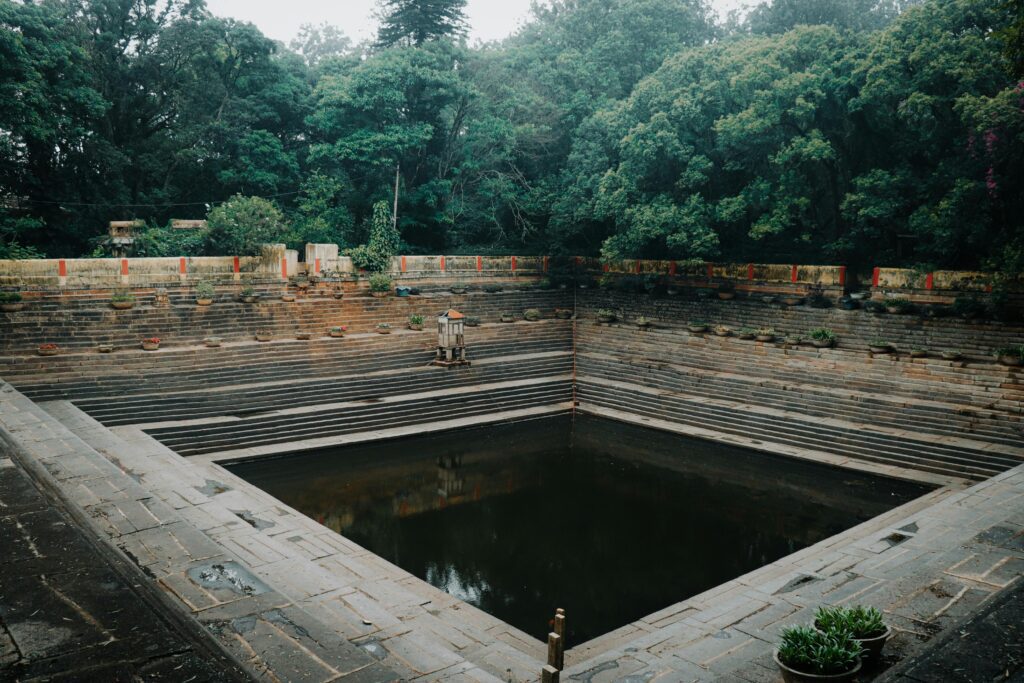
One of the most interesting features of the bawaris concerns their architectural design. These were constructed deep down into the ground, sometimes stories below ground level, with a set of steps leading down to the water.
The depth allowed the water to stay cool and accessible even through very hot summers.
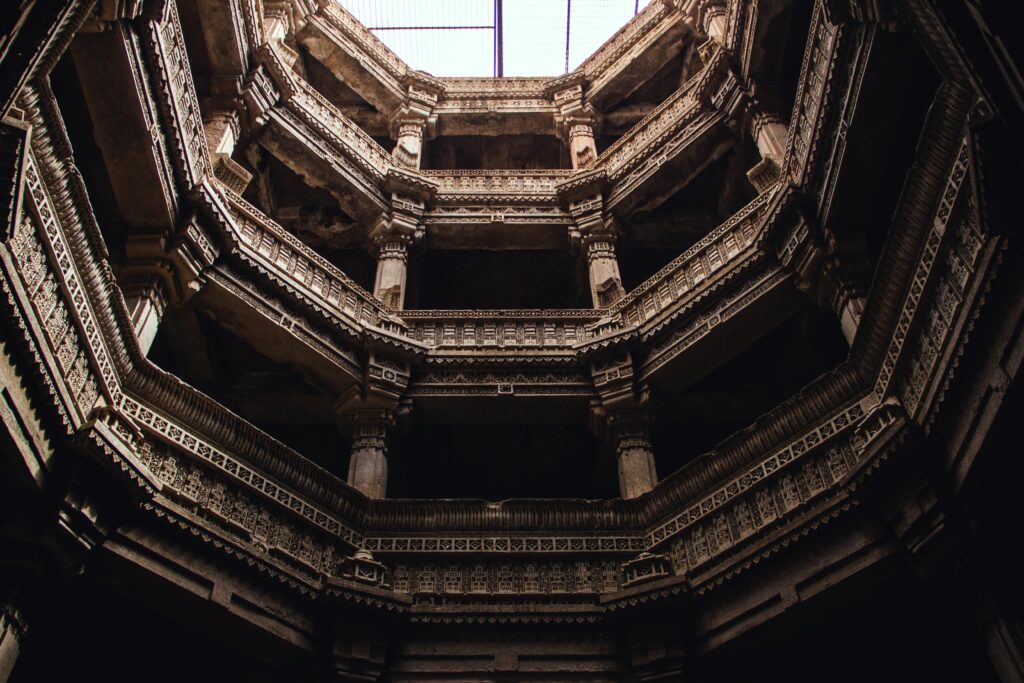
Bawaris are essentially masterpieces of geometry and symmetry. Steps are arranged in perfect patterns to form visually striking designs. Most of the bawaris came with pillared pavilions, balconies, and corridors, reflecting advanced engineering knowledge.
The artistic detailing found in bawaris shows the richness of Rajasthan architecture. Floral motifs, mythological figures, and geometrical patterns adorn the walls and pillars.
Several stepwells marked the influence of Indo-Islamic architecture through domed chhatris, arches, and ornamental niches.
These architectural elements turned bawaris from simple water structures to monumental works of art.
Role of Bawaris in Ancient Water Management
Bawaris played a central and indispensable role in ancient water management systems, particularly in the arid and semi-arid regions of Rajasthan.
In a landscape characterized by scarce rainfall, intense heat, and long periods of drought, the survival of communities depended heavily on effective water conservation methods.
Bawaris emerged as one of the most efficient and sustainable solutions to these environmental challenges.
The primary role of bawaris was to collect, store, and preserve water for extended periods. These stepwells were strategically constructed to harvest rainwater and tap into underground water sources.
Their deep vertical design allowed them to reach groundwater levels that remained stable even during dry seasons. As a result, bawaris ensured year-round water availability for drinking, cooking, agriculture, and livestock.
From an engineering perspective, bawaris demonstrated an advanced understanding of hydrology and climate adaptation. The stepped design enabled people to access water at varying depths depending on the water level.
During monsoon seasons, upper steps were used, while in summer, deeper levels provided access to cooler and cleaner water. This adaptability made bawaris highly efficient water systems long before modern technology existed.
The architectural planning of bawaris also contributed to water conservation. Built using thick stone walls and narrow openings, these structures minimized evaporation and maintained lower water temperatures.
This practical design is a defining feature of Rajasthan architecture, where buildings were designed to respond intelligently to extreme climatic conditions.
Over time, elements of Indo-Islamic architecture, such as arched corridors and shaded pavilions, further enhanced airflow and reduced heat within the structure.
Bawaris also played an important role in groundwater recharge. As rainwater flowed into the stepwells, it gradually seeped into surrounding soil layers, replenishing underground aquifers.
This natural process helped maintain ecological balance and supported nearby wells, fields, and settlements. In this way, bawaris functioned as integrated components of a larger water management network.
Beyond their practical function, bawaris supported social organization and economic stability. Reliable access to water allowed settlements to flourish, encouraged trade, and sustained agricultural productivity.
Markets, temples, and residential areas often developed around bawaris, highlighting their importance in urban and rural planning.
In summary, the role of bawaris in ancient water management extended far beyond simple storage.
They represented a holistic approach to sustainability, combining environmental awareness, engineering expertise, and architectural innovation.
Rooted deeply in Rajasthan architecture and enriched by influences of Indo-Islamic architecture, bawaris remain enduring examples of how traditional societies addressed water scarcity with intelligence and long-term vision.
Religious and Cultural Importance of Bawaris
Besides practicality, bawaris held immense religious and cultural value. Most stepwells were associated with temples and shrines dedicated to various Hindu deities; water drawn out of the bawaris was considered sacred and often used in rituals and ceremonies.
Culturally, bawaris served as community centers: travelers rested here, women gathered to fetch water, and festivals were celebrated nearby. These interactions strengthened social bonds and created a sense of shared identity.
Carvings and sculptures depicting spiritual beliefs and an artistic tradition influenced by both Rajasthan architecture and Indo-Islamic architecture can be found in many bawaris, epitomizing unity in diversity.
9 Incredible Bawaris of Rajasthan
Rajasthan boasts some of the magnificent bawaris of India. Besides being functional water structures, these stepwells are architectural marvels that reflect the artistic excellence of different historical periods.
Each bawari narrates its story, has a different design style, and carries different cultural significance.
All these put together showcase the brilliance of Rajasthan architecture and the subtle influence of Indo-Islamic architecture upon traditional water systems.
6.1 Chand Baori, Abhaneri
The bawari of Chand Baori is one of the oldest, deepest, and most visually stunning ones in Rajasthan. Constructed in the 9th century AD, during the reign of King Chanda of the Nikumbh dynasty, this stepwell features nearly 3,500 narrow steps arranged with perfect symmetry across thirteen levels.
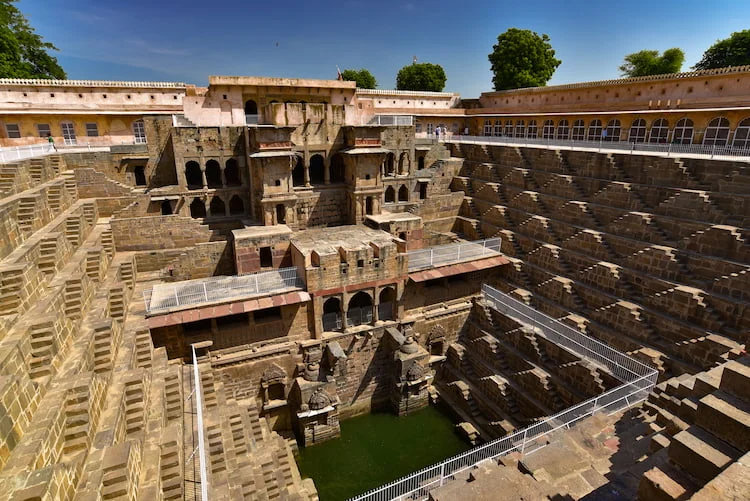
The geometric precision of Chand Baori is awe-inspiring, and it is one of the finest examples of early Rajasthan architecture.
The steps follow an intriguing pattern that is almost hypnotic in appearance if seen from atop. On one side of the bawari, pillared pavilions and shaded galleries were constructed to provide resting spaces for royalty and travelers.
The presence of ornamental arches and decorative elements shows early influences that later evolved into Indo-Islamic architecture. Besides, Chand Baori hosted temples, underlining the spiritual meaning of water in ancient times.
6.2 Raniji Ki Baori, Kota
Raniji Ki Baori is one of the most beautiful and artistically rich bawaris of Rajasthan. This baori, constructed in the 17th century by Queen Nathavati Ji of Kota, is a fine example of royal patronage and refined craftsmanship.
The bawari is designed with exquisitely carved pillars, sculpted niches, and fine stonework. The entrance is grand, executed with arches that clearly show an influence of the Indo-Islamic architecture, melding into the traditional Rajasthan architecture.
Raniji Ki Baori was more than a source of water; it was a sign of royal benevolence and dedication. The depth and structural arrangement of the well maintained a year-round availability of water, while the artistic design made it a heritage monument.
6.3 Neemrana Baori
Located near the historic Neemrana Fort, Neemrana Baori is among the biggest step wells present in Rajasthan. The 18th-century structure extends several levels deep, with impressive scale and strength at its best.
Neemrana Baori is an example of functionality in design, with long staircases and broad landings for easy access to water.
This reflects the practicality in the Rajasthan architecture, where durability and efficiency were adopted as the keynote in the extreme climatic conditions.
While simpler in decoration, the use of arches and proportional design evinces subtle elements of Indo-Islamic architecture, especially in the disposition of corridors and pillars.
6.4 Toorji Ka Jhalra, Jodhpur
Toorji Ka Jhalra is a restored urban bawari in the heart of Jodhpur, built in the 1740s by a queen of Maharaja Abhay Singh and an essential source of water for the surrounding area.
The bawari is carved out of rose-red sandstone, so characteristic of Rajasthan architecture. Symmetrical steps with carved niches and stone chhatris lend an artistic charm to the building.
The design encompasses arched openings that reflect the increasing influence of Indo-Islamic architecture during that period.
Toorji Ka Jhalra demonstrates how bawaris have been integrated into city planning and everyday life, serving practical as well as social purposes.
6.5 Panna Meena Ka Kund, Jaipur
Panna Meena Ka Kund is a visually striking bawari situated close to Amer Fort in Jaipur. Highly famed for its crisscross staircase pattern, this stepwell is one fine sample of geometric excellence in Rajasthan architecture.
Steps rise upwards in a zigzag pattern, infusing both balance and symmetry. This design was not only aesthetic but also functional to allow people to access water from different directions.
Unlike some ornate bawaris, Panna Meena Ka Kund is comparatively simple in decoration. Still, its precision of geometry and harmony with spatial effects reflect architectural wisdom and subtle artistic sensibility influenced by regional traditions and early Indo-Islamic architecture.
6.6 Stepwells of Bundi
Bundi is often called the “City of Stepwells” with quite a few bawaris present within and in the area around this town. These were constructed by the local rulers as an answer to water shortage and in order to serve growing populations.
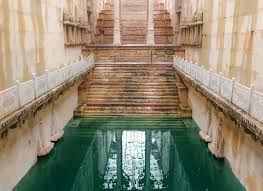
In Bundi’s bawaris, there are elaborate stone carvings, decorative pillars, and detailed sculptures depicting deities and mythological scenes that represent the most refined traditions of Rajasthan architecture.
The several bawaris at Bundi, too, have arched gateways and symmetrical layouts inspired by Indo-Islamic architectural traditions, hence making them architecturally rich and culturally significant.
6.7 Jodhpur Stepwells
A number of bawaris were built in Jodhpur to support the fortifications and urban settlements. These step-wells were strategically situated to ensure water availability during sieges and droughts.
The architecture of Jodhpur bawaris expresses stability and endurance. Thick stone walls, deep shafts, and shaded platforms mark their architecture.
While decoration is minimal, the use of arches and balanced proportions reflects elements of Indo-Islamic architecture integrated into Rajasthan architecture.
These bawaris underscore the defensive, survival-oriented role of stepwells in desert cities.
6.8 Abhaneri Village Stepwells
Besides the well-known Chand Baori, the village of Abhaneri contains smaller and less well-known bawaris, which also played a significant role in village life. These stepwells were community-driven projects and were daily gathering spaces.
The architecture of these bawaris is simple yet effective, reflecting rural adaptations of Rajasthan architecture. Steps made of stone, open platforms, and shaded areas facilitated villagers in collecting water and socializing.
Though modest, these step-wells are a reflection of early architectural influences that later contributed to the development of Indo-Islamic architecture in the region.
6.9 Lesser-Known Hidden Bawaris of Rajasthan
Most of the bawaris remain unexplored, hidden away in remote villages and desert landscapes of Rajasthan. Less famous, they are equally significant in understanding the evolution of water management and architecture.
These bawaris are often hidden away, featuring raw stone construction with minimal decoration and deep shafts designed for pure survival. They are the most natural forms of Rajasthan architecture, shaped by environmental necessity.
Regardless of their simplicity, some of the bawaris demonstrate early architectural patterns that influenced later styles, including Indo-Islamic architecture, which makes them very valuable historical resources.
Decline and Preservation of Bawaris
With the advent of a piped water supply system, bawaris gradually lost their significance. Many step wells were left unattended, filled with garbage, and even forgotten.
The recent conservation initiatives taken by the government and the heritage organisations in restoring bawaris as cultural monuments are quite imperative in securing these architectural genres of Rajasthan and its traditional water wisdom.
Bawaris as Heritage Tourism Attractions
With growing recognition, bawaris are now emerging as heritage tourist attractions in their own right, attested by their architectural elegance, historicity, and sustainability.
Bawaris have immense value regarding the appreciation of Rajasthan architecture and Indo-Islamic architecture, be it educational value or cultural insight.
Best Time to Explore Bawaris in Rajasthan
The best time to visit bawaris is during winter from October to March. During this period, one can comfortably enjoy the pleasant weather and understand the depth, carvings, and surroundings.
Conclusion:
Bawaris as Timeless Architectural Wonders The bawari represents one of the most thoughtful and enduring achievements of traditional Indian engineering and design.
These stepwells, which evolved into lifelines for the populous state of Rajasthan in the challenging climatic conditions, served not only for water security but also as cultural and social centers.
The continued presence of bawaris across the region still remains a strong reminder of how architecture once worked together with nature.
The architectural depth of the bawaris is indeed a reflection of the true spirit of Rajasthan architecture. Their symmetrical steps, deep shafts, pillared corridors, and intricately carved stone surfaces bespeak an advanced knowledge of geometry, material strength, and climate responsiveness.
Unlike modern structures that often emphasize functionality alone, bawaris successfully combined utility with artistic expression and turned water storage systems into architectural masterpieces.
The bawaris also absorbed facets of the Indo-Islamic architecture over centuries, especially during periods of cultural exchange and political transition.
Arched gateways, domed pavilions, balanced proportions, and decorative niches eventually found their place in the traditional designs of the step wells.
This melding added to their aesthetic appeal and brought forth the adaptability intrinsic in the architectural traditions of Rajasthan.
But beyond structural brilliance, bawaris played a vital role in shaping community life. They were places of gathering, rest, worship, and social interaction. Religious rituals, local festivals, and daily routines often revolved around these stepwells, giving them emotional and cultural significance.
In this way, bawaris became living spaces rather than static monuments. Even though their relevance waned with the advent of modern water supply systems, their historical, cultural, and environmental importance cannot be denied.
They stand today as mute witnesses to a time when sustainability, craftsmanship, and community welfare guided architectural practice.
It is only by preserving bawaris that the heritage of Rajasthan architecture can be preserved, together with an understanding of the historical evolution the region underwent under Indo-Islamic architecture. In other words, bawaris are much more than ancient water structures.
They are eternal symbols of resilience, innovation, and cultural harmony. Their continued presence enriches Rajasthan’s heritage landscape and offers deep insight into how traditional societies addressed environmental challenges with intelligence and artistic vision.
Pingback: CHAND BAORI: 7 Powerful Facts About Baori Architecture You’ll Love - Padharodesh
Pingback: Raniji Ki Baori: 7 Stunning Architectural Wonders You Must Explore - Padharodesh