
Table of Contents
Introduction
Mehrangarh Fort is one of the most beautiful and historic sites in India, proudly overlooking the blue city of Jodhpur in Rajasthan. Mehrangarh Fort is nestled on top of the rocky cliffs of Bhakurcheeria Hill.
It is more than just an fort; it is an emblem of Rajput honor, valor, and excellence. It is an awe-inspiring piece of architecture as it was initially constructed in the 15th century.
“The significance of Mehrangarh Fort, as a tourist destination, is that of grand proportions, rich historical contexts, and unmatched architecture.”
“Mehrangarh Fort stands out as a witness to the royal ambitions, refinements, and intelligence of centuries.”
“Every wall, every gate, every palace, and every courtyard of Mehrangarh Fort speaks of power, art, and endurance.”
Architecturally, Mehrangarh Fort is a blend of strength and beauty. The robust. walls of Mehrangarh Fort safeguard the intricate carvations, mirrors, latticework windows, and well-designed spaces of the palace.
This blend of opposite qualities makes Mehrangarh Fort one of the best examples of forts of Rajasthan and a major tourist destination in the state.
Hill Top Architecture of Mehrangarh Fort
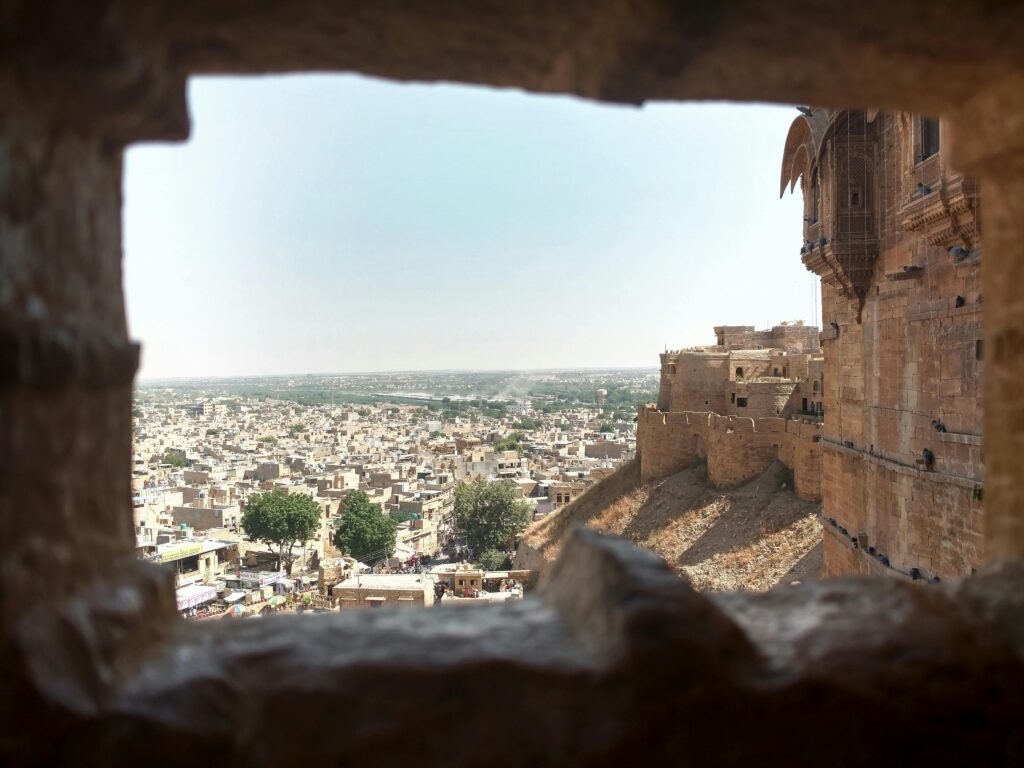
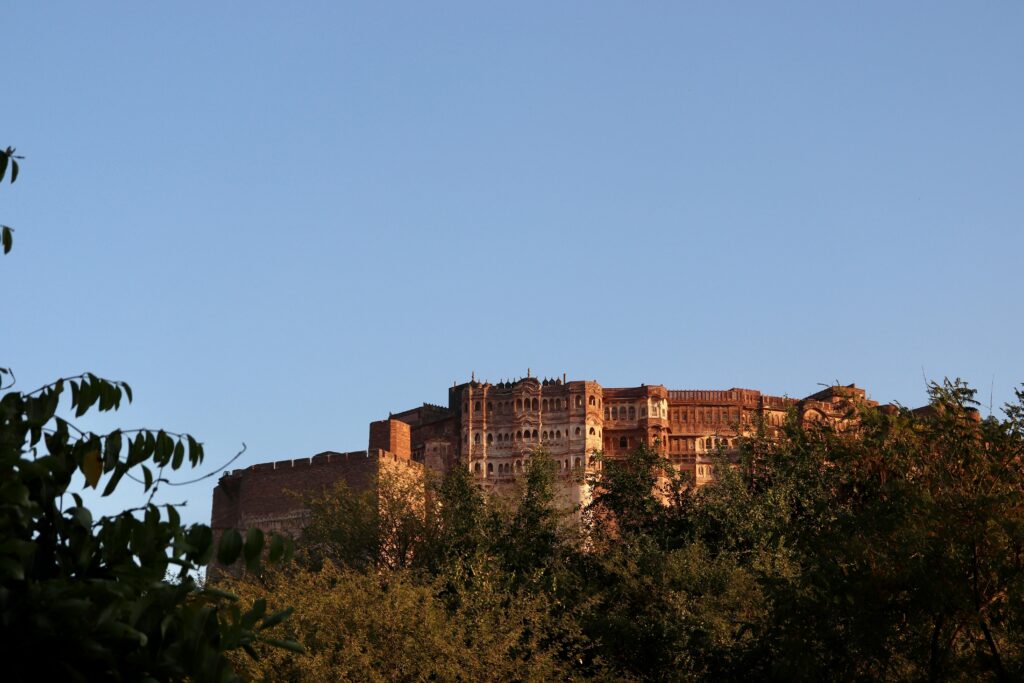
One of the most interesting architecture-related facts about Mehrangarh Fort is its location atop a hill. The fort lies atop the Bhakurcheeria Hill, which towers around 410 feet above the rest of the plains.
The purpose of choosing such a location was to create a natural barrier from any attack as well as to dominate the surrounding area.
The architectural design of Mehrangarh Fort is such that it makes the most of the topographic features of the hill on which it is built.
This is because the builders made use of the rock formations on the hill and did not attempt to level the surface. This makes it impossible to separate the fort from its foundation.
Architecturally speaking, it is found that because of building on top of a hill, there was long-range visibility, early detection of enemy approaches, and also an excellent view of Jodhpur. This is testimony to the military intelligence of the rulers of Rathore.
This hilltop architecture is presently an important aspect of Mehrangarh Fort being a tourism site. The tourists are attracted by the scenery, the site, and the experience of being at the pinnacle of history.
Massive Fort Walls and Strong Gate Design
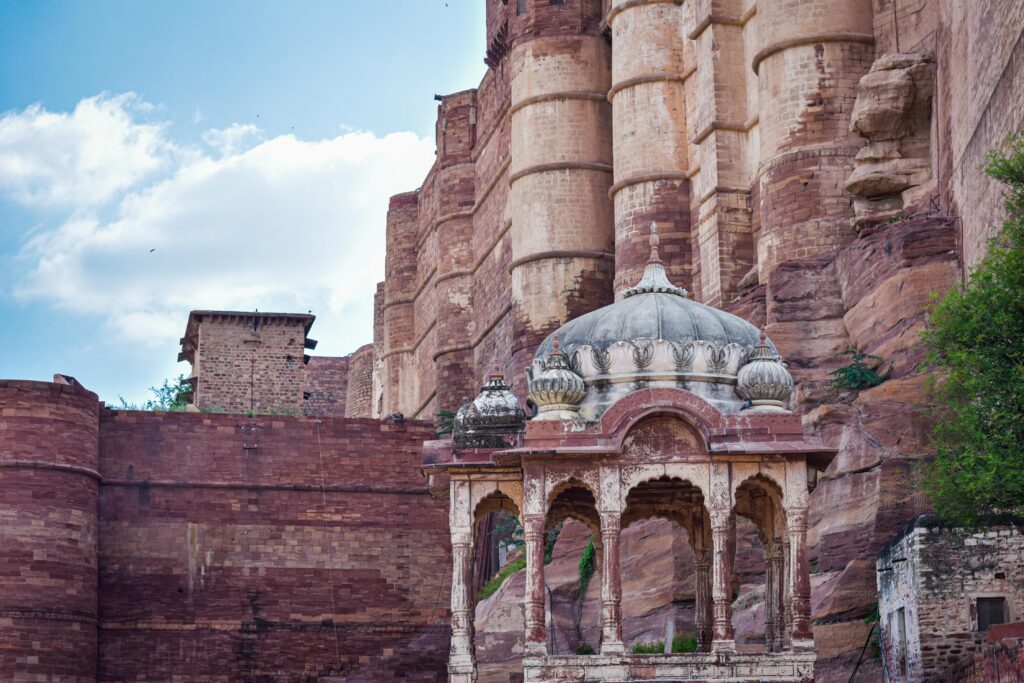
The massive walls of Mehrangarh Fort are one of its most remarkable features. Standing up to 120 feet high and up to 70 feet thick at some points, these walls were intended to be invincible. The design is all about strength, durability, and intimidation.
Mehrangarh Fort also has a number of gates, each designed for a particular purpose of defense. The most famous gates at Mehrangarh Fort are Jai Pol, Fateh Pol, and Dedh Kangra Pol.
These gates were made of thick iron spikes so that enemy elephants cannot break through, a usual warfare strategy during the medieval period.
The design of gateways takes on a zigzag pattern instead of straight lines. This design tactic hampered the progress of attackers and left them vulnerable to firing from above.
The design on gateways shows marks of bombardment by cannonballs, indicating past encounters at Mehrangarh Fort.
As a tourist location, the sheer walls and gates tend to introduce tourists to the fortified architecture of the fort in an impressive manner. The walls and gates showcase the ingenuity of the architects and the need for safety in Mughal architecture.
Intricate Stone Carvings and Rajput Architecture
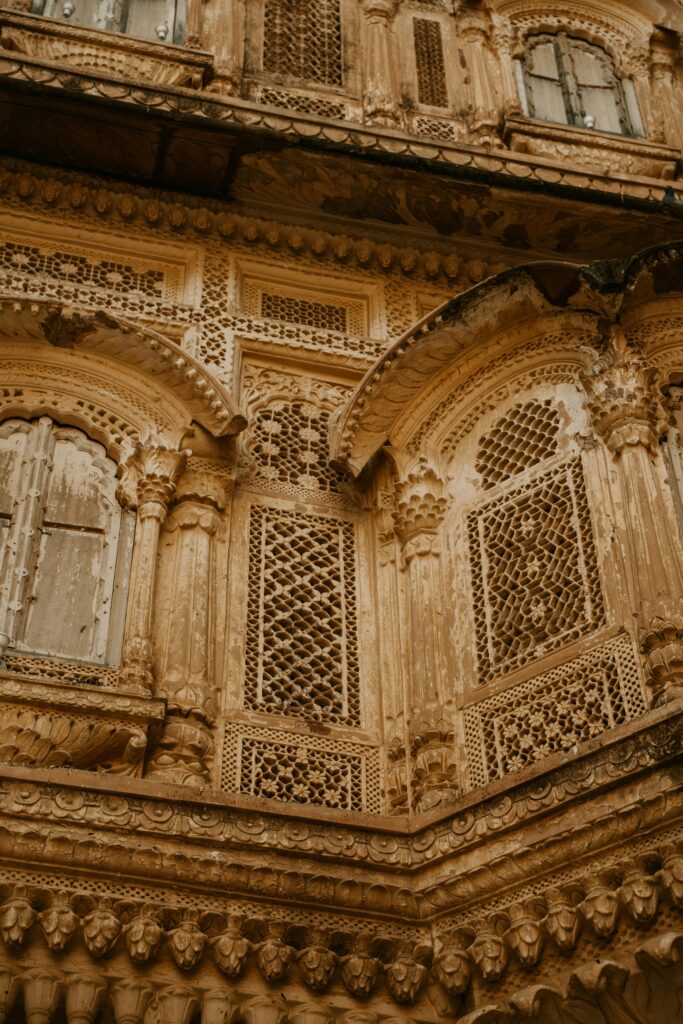
Apart from its defensive capabilities, Mehrangarh Fort is famous for its carvings that showcase advanced Rajput style architecture. It was possible because of the use of red sandstones, which enabled carvers to carve out beautiful patterns and designs of flowers and symbols.
The architectural design of Mehrangarh Fort is a blend of Rajput and Mughal styles. Jharokhas, Jalis, and ornate columns are the major design elements that contribute to its aesthetics.
These design elements served purposes of ventilation without compromising the element of privacy. These were essential design elements in Indian architecture.
Each carved surface within Mehrangarh Fort is a reflection of artistic finesse. The carvings were not only for artistic purposes, as one might assume, but also carried meanings of “prosperity, protection, and divine blessings).”
These carvings make this fort a living museum for tourists. These carvings further make this fort a very good tourist destination by adding richness to the fort through art.
Majestic Palaces Showcasing Royal Architecture
The palaces in Mehrangarh Fort are the epitome of royal architecture found in Rajasthan.
Though the architecture of Mehrangarh Fort symbolizes military might and strategic planning, there is an entirely different world of luxury and artistic advancement to this place in the palaces inside the fort. The palaces were designed not just as royal abodes but as an emblem of royal might and artistic excellence as well.
Architectural designs of those palace structures at Mehrangarh Fort show how functionality and beauty were so well harmonized.
Different palace structures were meant for distinct functions, yet all palace structures are well harmonized by architectural beauty, skilled craftsmanship, and space arrangements.
All palace structures at Mehrangarh Fort significantly contribute to making Mehrangarh Fort a famous tourist destination.
Moti Mahal: The Architectural Center of Mehrangarh Fort&#
Moti Mahal, also referred to as Pearl Palace, is amongst the most famous palaces in Mehrangarh Fort. Architecturally, it is an audience hall where the ruler held discussions with his courtiers. It is a blend of majesty and functionality and holds immense importance in the architecture of Mehrangarh Fort.
The most notable aspect, however, is its wide façade adorned with intricately carved windows.
The windows are designed in such a way that there are latticed screens, which enable the flow of air while also enabling the residents to have privacy. This was innovative, given the fact that it happened centuries ago.
The ceiling of Moti Mahal is dome-shaped and supported by ornate pillars adorned with colorful paintings. The use of smooth materials improved lighting, thus making the interior of the palace luminous. This architectural feature portrays the comfort, significance, and aesthetic nature of Mehrangarh Fort.
Phool Mahal: Luxury and Artistic Architectures
Phool Mahal means the Flower Palace. This structure symbolizes the luxurious part of Mehrangarh Fort architecture. Unlike the formal Moti Mahal, this structure intended for other functions like relaxation and enjoyment. Its architecture style portrays elegance and richness.
Phool Mahal has walls and ceilings embellished with intricate gold filigree work, floral patterns, and miniature paintings. It showcases the impact of Mughal art merged completely with Rajput styles.
Phool Mahal Palace was created with the intention of impressing and representing royal prosperity.
Phool Mahal, on architectural lines, has been designed with great planning to optimize its acoustics and lighting system, making it perfect for music performances and hosting events.
Such architectural designs go on to establish how architecture within Mehrangarh Fort moved beyond defense and into cultural sophistication.
Sheesh Mahal: Architectural Ingenuity through
Sheesh Mahal, or the Mirror Palace, is another wonder in Mehrangarh Fort. This palace is known for its clever use of mirrors in its architectural designs. Small pieces of mirrors were inlaid into walls and ceilings to enhance lighting even when the rooms received little light.
The architecture of Sheesh Mahal is such that it creates a shimmering effect, where the light of candles gets translated not only into a captivating sight of light but also a view of reflection.
The IFRB was very intricate and demanded very skilled craftsmanship when it came to mirrors. Nothing was ever amiss; the mirrors were strategically placed to provide symmetry and permanence to the monument as well. All this goes to support the fact that Mehrangarh Fort had some of the best architecture and skills in its
Zenana Deodi: The Architectures of Privacy and Power
Zenana Deodi functioned as the ladies’ chambers in Mehrangarh Fort. The architecture of this zone demonstrates effective planning to obtain privacy, security, and comfort at the same time. Unlike audience halls, Zenana Deodi was planned with closed courtyards, filtered balconies, and limited entry points.
Jalis, used in Zenana Deodi, enabled women to watch events undetected. This served a dual function by satisfying both cultural and space requirements. The courtyard enabled proper lighting and air circulation, thereby providing seclusion to women.
This section of Mehrangarh Fort illustrates how architecture adjusted to social formations and traditions. This shows that it is complex because it was not only an army fortress but also a palace.
Harmonio Architecturalo en el Complejo Fortificado
Though erected at various times, there is uniformity in the design of the palaces at Mehrangarh Fort. The architects chose red sandstone, similar designs, and proportional planning.
The layout of the palaces made it easy to move from public, residential, to private areas. Such planning made the spaces more efficient and comfortable without compromising grandeur.
It helps in building consistency in architecture, thus making Mehrangarh Fort’s identity as an overall site even stronger, as this place is already an iconic tourist destination with impeccable design.
“The palaces were not only symbols of the power of the monarchy
The architectural design of the palace in Mehrangarh Fort shows the cultural importance given to art by the Rathore rulers. Artistic elements, creativity, and meanings were embedded in palace architecture designs.
Nature, mythology, and royal life scenes could be commonly noticed in murals, carvings, and design details.
These artistic aspects offer great insight into the aesthetic values and cultural practices of the time. The palaces therefore become architectural documents which preserve history in stone and artistic forms.
“The Palace” and Modern Touristic Identity
Yet, there exist
In modern times, it is the palaces within the Mehrangarh Fort that are some of the most loved attractions about the fort. This is due to the preserved structures and history showcased within the fort.
The palace provides a contrasting experience of defensive architecture and royal opulence, thereby providing a holistic experience of life at Mehrangarh Fort. Such a balance between defense and elegance is one of the most striking aspects of its architecture.
Advanced Water Storage and Structural Designs
One of the most fascinating and overlooked features of Mehrangarh Fort is its intelligent water storage and structural design.
Built in a water-scarce region of Rajasthan, where water resource management is always a big concern, the designs of Mehrangarh Fort demonstrate exemplary foresight and ingenuity.
Mehrangarh Fort was not just a means of defending oneself against invaders but also a way of sustaining life.
The designers of Mehrangarh Fort were well aware that to survive, they had to rely to some extent on the availability of water.
Therefore, the management of water had become an integral part of the entire architectural design of the fort and not just an add-on feature. The entire fort had been designed to collect rainwater and conserve it, thereby making this fort self-contained.
Rain Water Harvesting as an Integral Architectural Element
The architecture of Mehrangarh Fort is replete with a sophisticated rainwater harvesting system, where water was accumulated from rooftop, courtyard, and open rooftop areas.
The sloping surfaces were shaped in such a way that rainwater flowed into stone channels, thereby accumulating it into underground reservoirs and tanks, thus minimizing losses and maximizing storage during monsoon.
Unlike contemporary waterways, these waterways were excavated right into stones, making them robust and requiring lessmaintenance. The setting up of these waterways demonstrates proper understanding of water flow from gravity, which did not need any support system.
Such architecture shows the level of scientific understanding of ancient engineers involved in Mehrangarh Fort architecture.
Stepwells, Tanks, and Underground Reservoir
Mehrangarh Fort also has a number of water storage tanks and underground reservoirs located throughout the fort. These were built to help retain coolness and prevent evaporation of the water by remaining protected from the heat of the sun and the atmosphere.
This ensured the water quality remained fresh for a long time. Walls surrounding the reservoirs were thick to prevent the water from getting contaminated and to reduce the amount of evaporation due to heat.
Some were close to royal palaces, while others were situated in public spaces, making it accessible to both royalty and soldiers. This inclusive design shows how the Mehrangarh Fort served as a fully functional city, contrary to its sole purpose as a fortress.
The presence of stepwells in the fort again exemplifies the adaptability of architecture. Stepwells facilitated the regulated entry of water and served as cooling systems, maintaining cool temperatures in adjacent areas when it was too hot outside. This again enhances the architectural complexity that makes Mehrangarh Fort an exemplary tourist destination.
Structural Planning For Long Term Sustainability
The structural planning of Mehrangarh Fort is done in such a way that it is long-term sustainable. The architects chose to use sandstones, which were available in the region. This not only made the fort strong, but the substance also had the effect of controlling temperatures inside the fort.
The building layout was designed in such a way that water resources were well distributed in the fort.
This meant that the forts did not rely on one reservoir because their water systems were interconnected. This was another aspect that showcased the ingenuity of the architects who built forts.
This is the kind of smart planning that has kept Mehrangarh Fort operational for centuries and strengthened its position as an architectural marvel and an historic destination for tourism.
Hydration in Wartime and during a Siege
Water storage systems were very important in cases involving warfare. The architecture of the Mehrangarh Fort was designed to serve thousands of residents and military personnel in case of prolonged sieges. The huge capacity for storing water ensured an endless supply to make the fort defy an enemy siege for several months.
The installation of water works inside fortifications ensured protection against damage by enemy forces. Storage of water underground eliminated threats of poisoning and damage, thus underlining once again the role of architecture for survival and defense.
Secondly, these points illustrate how Mehrangarh Fort was not only aesthetically intimidating but strategically impassable, thus making its importance as a fortified tourist site even more authentic.
Water and Architecture
The sophisticated water management system at Mehrangarh Fort has continued to amaze even contemporary architects and historians. It is observed that its sustainable principles neatly fit into the current trends in environmental architecture.
These water bodies have been retained to date as part of the architectural heritage of the fort. They provide an understanding of how the environment was made suitable by architectural design of a bygone era without the use of new technology.
This aspect of Mehrangarh Fort serves to strengthen its status as an educative tourist site, where visitors are able to witness how architecture, engineering, and sustainability were integrated.
Contribution to the Architectural Excellence of Mehrangarh Fort
The inclusion of water storage in the architectural design makes Mehrangarh Fort an architectural wonder beyond the scope of other fort architectures. This is an example of how architectural designs can optimize geography, climate, and human needs through intelligent design solutions.
In other words, through a combination of defense power and planned sustainability, Mehrangarh Fort is a complete architectural system and not a group of structures.
This is one of the reasons why Mehrangarh Fort has continued to be one of the most revered heritage tourism sites in India.
Courtyards, Temples, and Cultural
Architectural designs of Mehrangarh Fort range from palace and walls to open areas like courtyards and temples. This was where people lived and conducted their religious and other routines.
All of the courtyards were intended to provide temperature modulation by allowing air and sunlight penetration without invading privacy. These features demonstrate how climate-responsive architecture existed before more contemporary notions of architectural design.
The Chamunda Mata Temple, which lies inside the fort, also carries immense religious significance. The architecture of the temple is quite simplistic yet elegant, which represents “devotion and protection.” The positioning of the temple inside the fort signifies the amalgamation of religion with the architecture of the royal structure.
This provides an added layer to the identity offered by Mehrangarh Fort. This is more than the identity aspect that is possessed by the monument.
Current Position of Mehrangarh Fort Among the Best Tourism Locations
In contemporary times, Mehrangarh Fort remains one among the most visited tourist sites in India. The fort’s architecture, museums, and cultural exhibitions make it an attraction for millions of tourists every year.
The fort has galleries featuring weapons, paintings, textiles, and antiquities, showcasing its architectural and historical development. The walkways leading up to it are designed to create a pleasing effect without adulterating its ancient architecture.
Mehrangarh Fort is a perfect example of how heritage can be maintained and made accessible. The structure of Mehrangarh Fort is authentic yet adjustable in the context of tourism.
Architectural Style and Historical Importance
Mehrangarh Fort’s architecture has been the result of several generations and the evolving contributions of rulers over the years. They have added to the fort while keeping the design intact.
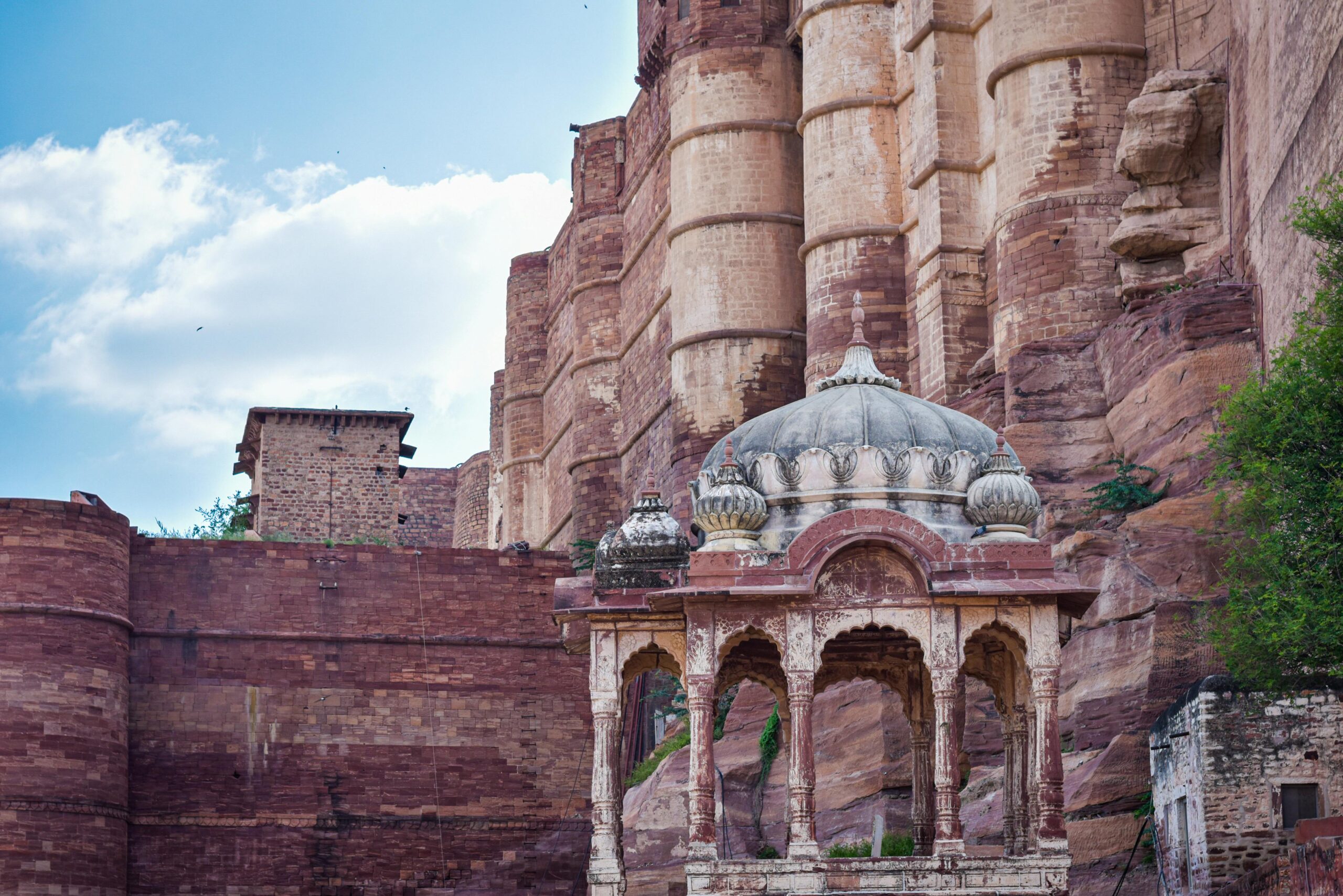
An analysis of this layered structure gives inferences on trends, technology, and politics. The historical importance of forts cannot be separated from their architecture as each one defines an epoch in Rajasthan’s history.
The Mehrangarh Fort has stood witness to resilience, creativity, and foresight and holds great significance for heritage tourism in India.
Importance of Mehrangarh Fort to Culture
The cultural events, festivals, and ceremony conducted inside Mehrangarh Fort reflect its adaptable architectural style. The open spaces, courtyards, and halls remain venues for cultural events, emphasizing their relevance in the current society.
These events are supported by its architecture without compromising its integrity in terms of history. This is what gives Mehrangarh Fort its importance in terms of culture.
Experience of Visitors and Conservation Practices Preservation efforts aim not only at preserving the original architectural forms of the buildings but also ensuring the safety of the visitors.
Restoration methods involve the use of local materials and techniques. Preservation and restoration of these buildings will help keep them Mehrangarh Fort is a model for conservation, showing how architecture can be conserved and maintained as a significant tourism location.
Conclusion
One of the most impressive historical architecture structures located in India is the Mehrangarh Fort, having reflected royal ambitions and genius for several centuries. Lofty in the state of Jodhpur, Mehrangarh Fort showcases how architecture was not just an art for building but an art for wielding power, protecting oneself, and expressing culture and identity as well.
All the features of this historical architecture, from the highest walls to intricate details of the royal palaces, give meaning to this heritage structure as one of the most visited tourist sites.
The architecture in Mehrangarh Fort is a perfect exemplar of a fine blend between defense and aesthetics. The massive fort walls and impressive gates display the advanced defense features, but the intricate carvings, lattice-patterned windows, and mirror work in the palace offices showcase the fine aesthetic sense and attention to beauty in the architecture.
This juxtaposition thus depicts how the Rajput style of architecture was developed to cater to both defense and aesthetics requirements. The Mehrangarh Fort is another example of how geography was intelligently utilized for designing.
The fort is built on a rocky outcrop, thereby blending perfectly with its surroundings, which were, in fact, used for creating a natural defensive system. The intention behind arranging courtyards, temples, water storage, and dwelling areas was a reflection of a deep understanding of climate and sustainability.
This was a wise plan from an architectural standpoint, which helped the fort survive through thick and thin for so many years. Besides its physical structure, Mehrangarh Fort also has immense historical significance to the culture of the region.
The architecture of Mehrangarh Fort not only brings back the memory of the Rathore family legacy but also takes one back to the royal and religious practices of the people of those days.
The incorporation of temples, halls, and social areas in the Mehrangarh Fort prove the use of architecture to uphold the historical and social practices of the people of Rajasthan even now. In modern times, Mehrangarh Fort is surviving as a world-renowned tourism destination.
This is because it is appreciated for its remarkably preserved structures and historical authenticity. Conservation efforts are taken to ensure the structural integrity of the fort, along with maintaining its historical authenticity. This is possible by making use of museums, galleries, and preserved spaces.
Finally, Mehrangarh Fort is an example of how architecture is capable of withstanding the passage of time. It is an embodiment of battles, celebrations, art, and administration through its walls, making it one of the “best examples” of architecture in “entire India.”
As one of the tourism destinations based on “history” and “culture,” Mehrangarh Fort is still an embodiment of “resilience, creativity, and royal heritage” because of its “phenomenal” architecture.